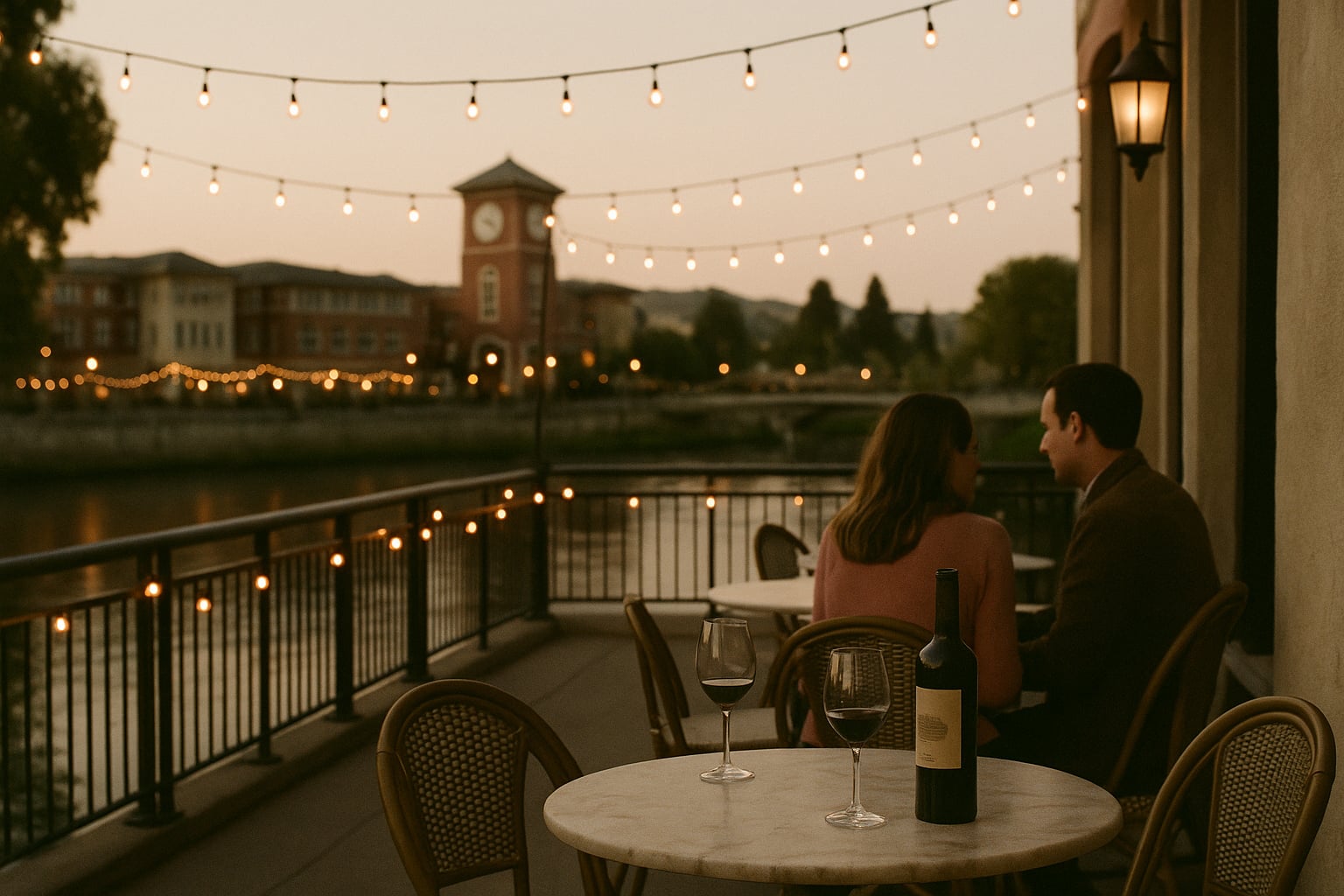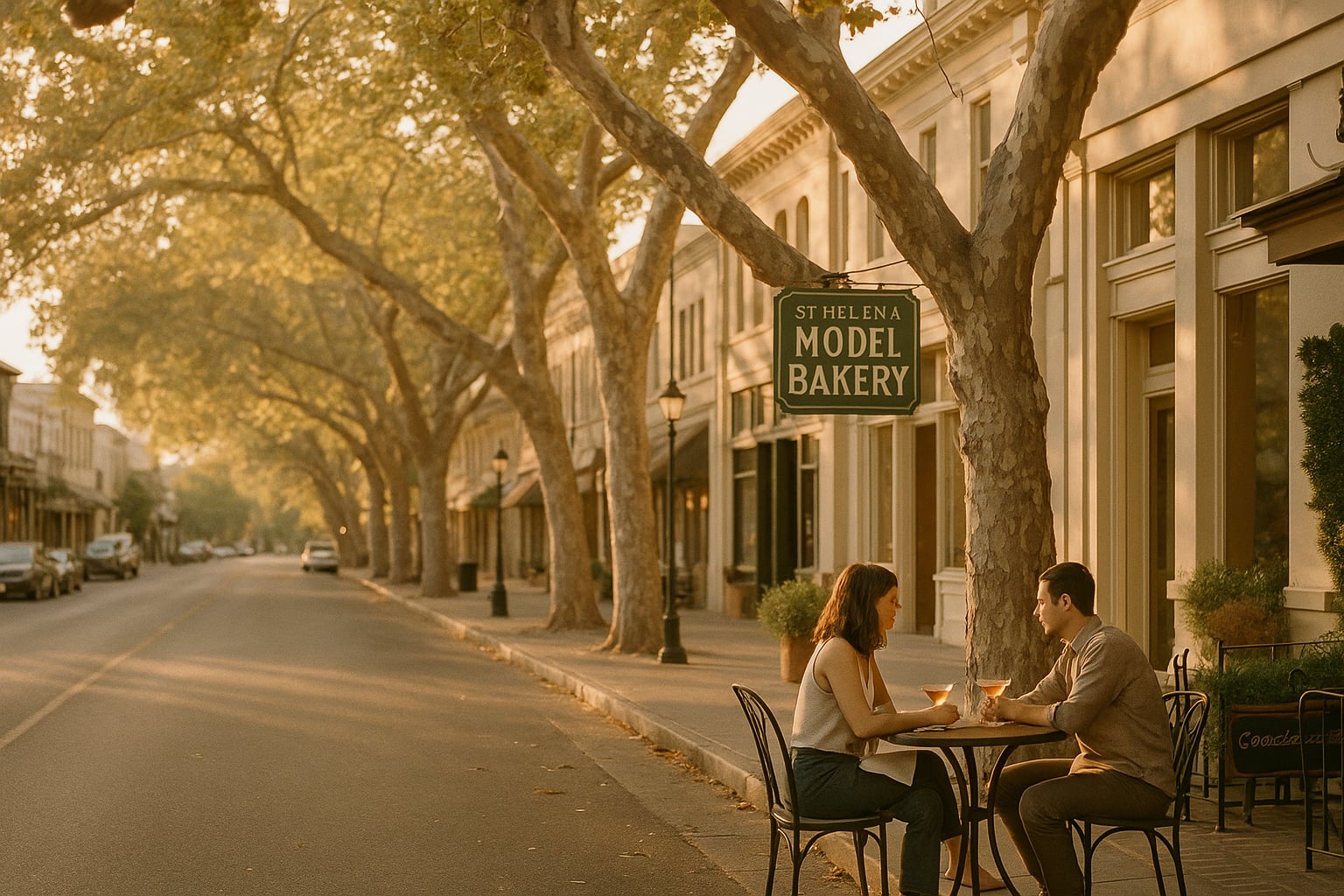
You had a good night. Actually good. The kind where the food earns its price, the wine gets ordered without negotiating over it, and you're both leaning into the table instead of away from it. Then you get home, and something sours before either of you has taken off a shoe.
Nobody threw anything. Nobody said the wrong thing. It just... went cold. And now you're both doing the silent orbit of the kitchen, one of you with a phone, one of you with a glass of water, neither of you sure what the temperature actually is.
This is one of the strangest relationship experiences there is. Because it's not a fight. It's the ghost of one.
The Transition Nobody Accounts For
Restaurants do something sneaky. They hold you in a kind of suspension. Good lighting, ambient noise that fills the silence for you, a server who appears exactly when eye contact gets too loaded. You're performing the best version of the evening together, and the setting is doing half the work.
Then you're in a car. Then you're at a door, hunting for keys. Then you're inside, under overhead lighting, with the dishes from this morning still in the drying rack.
The spell doesn't break dramatically. It just... doesn't transfer. And both people feel it, and neither person knows how to name it without sounding like they're complaining about a good night.
What's Actually Happening in the Car
The drive home is where it usually starts, even if nothing visible happens. Dinner conversation runs on its own fuel: topics, catches-up, the story about the thing at work you keep meaning to tell. But once you're moving through dark streets, that fuel runs out and there's a natural quiet.
A comfortable couple can live in that quiet. But most couples, even good ones, have a moment where the silence tips slightly. One person looks at their phone. One person picks a route the other silently disagrees with. The radio goes on at the wrong volume.
None of it is the problem. All of it is the beginning of the problem.
By the time you're pulling into the driveway, someone has already done a small recalibration. The mood is 6% different than it was forty minutes ago, and that 6% will do real work once you're inside.
The Door Is a Context Switch
Home carries everything you didn't bring to the restaurant. The unresolved thing from Tuesday. The way the bathroom hasn't been cleaned. The to-do list that neither of you has touched. The slight awareness that tomorrow is Monday.
None of it is new information. But walking through the door reactivates it. You were briefly somewhere else, and now you're back, and your nervous system knows exactly where it is.
The person who's more naturally anxious at home will feel the shift fastest. They'll go a little quiet, or a little busier. Start tidying something. Check the mail that absolutely could wait. The other person reads this as withdrawal, and they're right, and they're also misreading the reason.
You weren't pulling away from them. You were being pulled back into everything that was already there.
The Expectation Gap
Here's the part nobody admits: one of you thought the night was heading somewhere specific. Not necessarily anything dramatic. Just: more. More of the feeling from dinner, maybe. A glass of something at home. A continuation of whatever the evening felt like it was building toward.
The other person, equally reasonably, thought they were going home. Just: home. End of event. Shoes off, face washed, television or sleep or both.
Neither expectation was communicated. So when they diverge, neither person knows that's what happened. One person feels vaguely rejected. The other feels vaguely accused of something. And both of them are standing in their socks wondering why the night suddenly costs this much.
What the Chill Actually Is
It's almost never about the dinner, or the drive, or who loaded the dishwasher wrong in 2022. It's almost always about the drop: the specific small sensation of a good thing ending and the mood not knowing where to go next.
Some people manage that drop by becoming warmer. Some by going quiet. Some by getting busy with tasks that signal I'm still here but I need a minute. The problem is that all of these read differently to the person watching.
And then there's the classic move: one person tries to extend the warmth of the evening by reaching, somehow, for closeness. A touch on the back, a joke, a suggestion. And the other person, mid-drop, isn't there yet. So the reach lands wrong. The joke flatlines. The suggestion feels like pressure.
That's where the chill comes from. Not from anything either person did wrong. From a timing mismatch at an unguarded moment.
What Doesn't Help
Asking what's wrong when there's no clean answer. It forces the person who's still recalibrating to either perform fine or invent a grievance. Neither ends well.
Narrating the good night as evidence: I thought we had such a good time tonight. True. Also, somehow worse to say out loud.
Going to bed without any acknowledgment of the weird temperature. Because then you're both lying there in the dark, the dinner still half-warm between you, wondering if the other one is asleep yet.
What a Short Bridge Looks Like
Not a whole conversation. Not a repair attempt. Just something small that signals: I know we're back. I'm still with you.
Some couples have this as an unconscious ritual. A glass of water on the counter for both of them. Someone throwing on a playlist. Changing into something soft, then finding each other on the couch before the phones come out. The weight of a blanket shared without discussion.
It doesn't have to be romantic. It just has to close the gap between the restaurant and the bedroom: the forty-five minutes where the good night is most likely to leak out.
The Specific Thing Worth Noticing
If this happens to you regularly: after specifically good nights. Not bad ones. The pattern is worth paying attention to.
Good nights raise the stakes of the ending. The drop feels sharper when the peak was real. If every great dinner ends in this chill, it's worth asking what you're each afraid gets lost when the good thing stops.
Sometimes it's a need for reassurance that the warmth was real, not situational. Sometimes it's an old pattern of bracing before good things end. Sometimes it's simpler: someone is tired and the other person can't let the evening be over without it meaning something.
None of that requires a long conversation at midnight. But it might be worth a short one on a Sunday afternoon, when nobody's in the coat.
The dinner doesn't owe you a perfect ending. Neither does the night. But the forty-five minutes after? That's actually yours. It just requires a little more intention than the restaurant did.