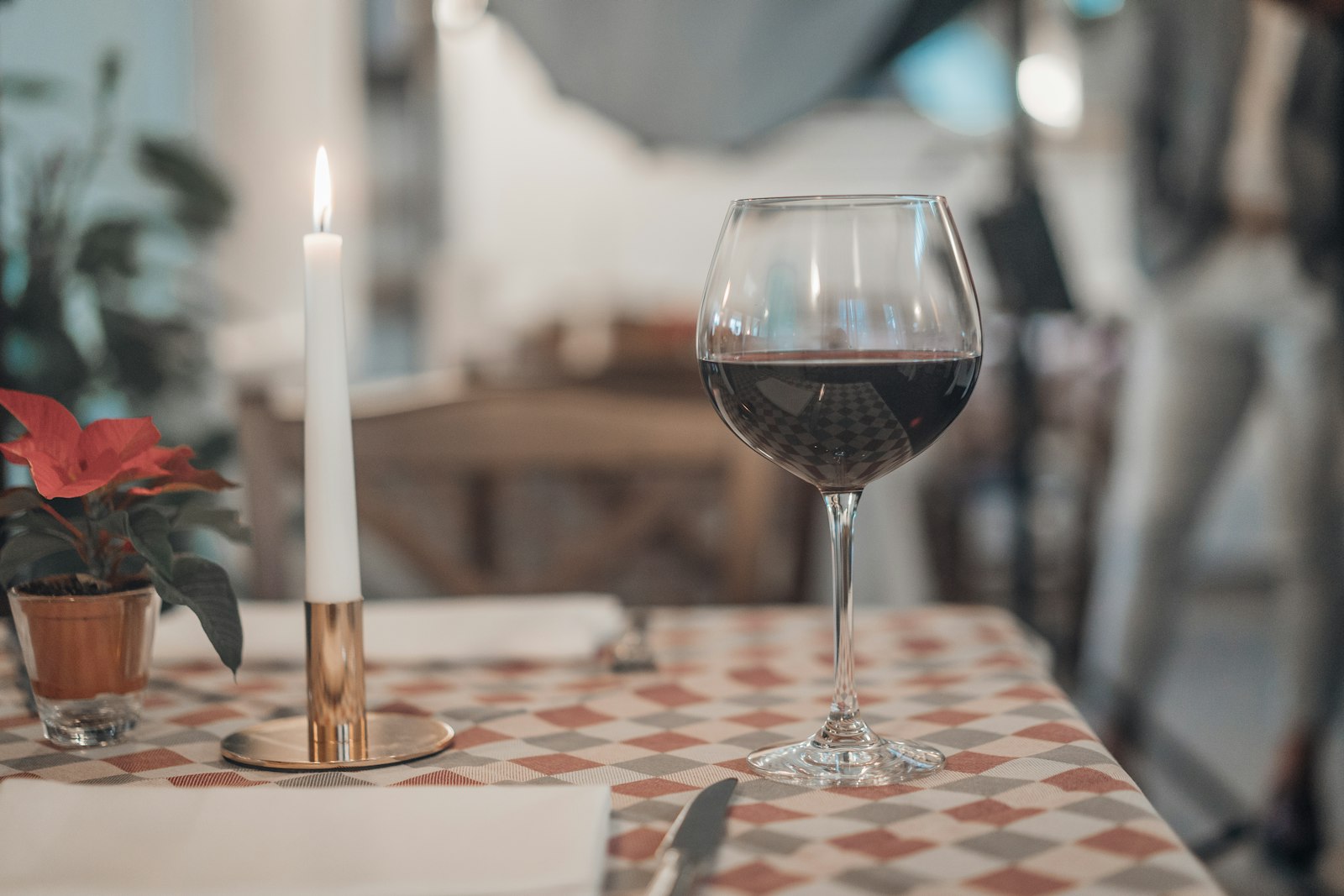
There's a version of a Saturday night that starts at a farmers market around ten in the morning and ends somewhere around midnight with olive oil on the counter, a half-empty bottle of something good, and the particular kind of quiet that only comes after a long, unhurried evening together. No reservation required. No parking to fight over. No neighboring table close enough to hear you.
Restaurants are wonderful. They're also somebody else's timeline, somebody else's lighting, and a room full of strangers eating twelve feet away. Cooking together at home isn't the consolation prize. For a lot of couples, it turns out to be the main event.
Why Cooking Together Hits Different Than Going Out
A restaurant puts you across from each other. It also puts you on your best behavior, in a public context, performing a version of the relationship rather than living inside it.
Your kitchen doesn't ask that of you. In the kitchen, you're moving around each other. One of you is tasting something off a wooden spoon. One of you is reading the recipe out loud while the other improvises. There's a kind of lateral intimacy in shared physical work that sitting across a white tablecloth can't replicate.
You're also building something. Which sounds corny but is genuinely true. You spend forty minutes making a thing, and then you eat it together, and it tastes like both of you put effort in. That matters in ways that are small and not small at all.
Start at the Market, Not the Grocery Store
This works better when you don't plan the menu in advance. Go to the farmers market — the Healdsburg one on Saturday mornings, the Ferry Plaza in the city, wherever you are — and buy what looks good. Two bunches of something. Whatever the vendor is excited about. A cheese you don't recognize.
The improvisation is part of it. When you don't have a rigid plan, you have to talk to each other. What do you want to do with this? Do you think that goes with the fish? I have no idea what that is but let's get it. Decision-making as foreplay isn't a stretch.
The Logistics That Actually Matter
Divide the kitchen like you mean it
Every couple has a kitchen dynamic. One person runs hot and wants to control everything; the other drifts in and out. Neither is wrong. What doesn't work is one person cooking while the other scrolls on the couch. That's just dinner service with an uninvested audience.
Give each other actual jobs. One person owns the protein. One person owns the vegetables and anything else. Overlap is fine. Hovering over each other's decisions isn't. Let the person who owns the dish own the call.
Phones go face-down at the start
This is the same principle as the phone-free dinner experiment, just applied to the cooking itself. The prep window, the cooking window, the eating window — all of it benefits from not having a third party in the room.
Music is fine. A podcast is not. The difference: music is ambient. A podcast is a guest you didn't invite.
Set the table like you'd set it for guests
This is the part people skip. Don't skip it. Candles. Actual napkins, not paper towels. The wine in a real glass. The small effort of setting the table signals to both of you that this is a real occasion, not just a meal you happened to eat at home.
It takes four minutes. It changes the entire feeling of sitting down.
What's Actually Happening While You're Chopping Onions
There's a reason this kind of evening tends to go somewhere. Not always sexually, though often. More accurately: it tends to open something up.
Shared physical tasks create a low-stakes environment for conversation. You're both doing something with your hands, both a little distracted, both slightly warm from the stove. You're not sitting across from each other in the loaded posture of let's talk. You're side by side, doing a thing. Which is when the actual things tend to get said.
Some of the best conversations I've had in this relationship have happened while one of us was deglazing a pan and couldn't make eye contact.
— MLL reader, Sonoma
This connects to something worth understanding: proximity without pressure is one of the quietest aphrodisiacs there is. The kitchen creates it without trying.
A Loose Template That Actually Works
Late morning: Market. No list. One rule — buy at least one thing you've never cooked with before.
Afternoon: Leave the haul on the counter. Decide nothing yet. Take a walk, read, do whatever you'd normally do. Don't let the dinner become an all-day project or it turns into labor.
Around 5 or 6: Open something. Rosé if it's summer. Something with weight if it's not. Pour two glasses and start talking about what you're making before you touch anything.
Cooking: Forty-five minutes to an hour. No rushing. Let one thing be slightly overcooked and let that be fine.
Eating: Slow. The table is set. You're not eating standing at the counter. Sitting down is the actual ritual.
After: Dishes can wait. They genuinely can. Whatever happens next happens next.
The Small Things That Make It Work
Wear something. Not necessarily anything elaborate. But not the same thing you've been in since noon. There's something in the act of changing clothes that signals a shift — that was earlier, this is now. A silk top. A linen shirt. The robe you like, if it's already that kind of evening.
Use the good olive oil. Light the candle that's been sitting there for three months. Put on the record that requires someone to get up and flip it.
These aren't aesthetic choices. They're signals to your nervous system that you're present. That tonight is something.
Frequently Asked Questions
What if one of us doesn't really cook?
Doesn't matter. Whoever is less confident takes a supporting role, not a passive one. Wash things. Taste things. Read the recipe. Set the table. The person who didn't cook the dinner is still part of making the evening.
What should we cook?
Something that takes real time but isn't technically demanding. A braise. A slow roast. Pasta with something that needs to simmer. The goal is a process you can talk through, not one that requires intense concentration. Anxiety-inducing recipes that could fail are not intimate. They're stressful.
What wine works for a night like this?
Whatever you'd actually drink. If you're in wine country: a Russian River Pinot for fall, a Dry Creek Zin if you're doing something with weight and heat, a Sonoma Coast white if the market pulled you toward fish. The point is a bottle with some thought behind it, not whatever is closest to the door.
What if we end up arguing in the kitchen?
Sometimes you will. Kitchens have a way of surfacing exactly who controls things and who resists being controlled. If it tips into something real, name it and step back from the stove for a minute. The dinner can wait. If it's just friction about garlic-to-olive-oil ratios, let it go. That's not a fight. That's just two opinions about dinner.
The best evenings don't announce themselves. They accumulate: the market in the morning, the wine around six, the warmth of the stove, the conversation that happens sideways without meaning to. You eat something you made. You sit longer than you expected to. The dishes are still there when you go to bed.
That's the whole thing. That's enough.