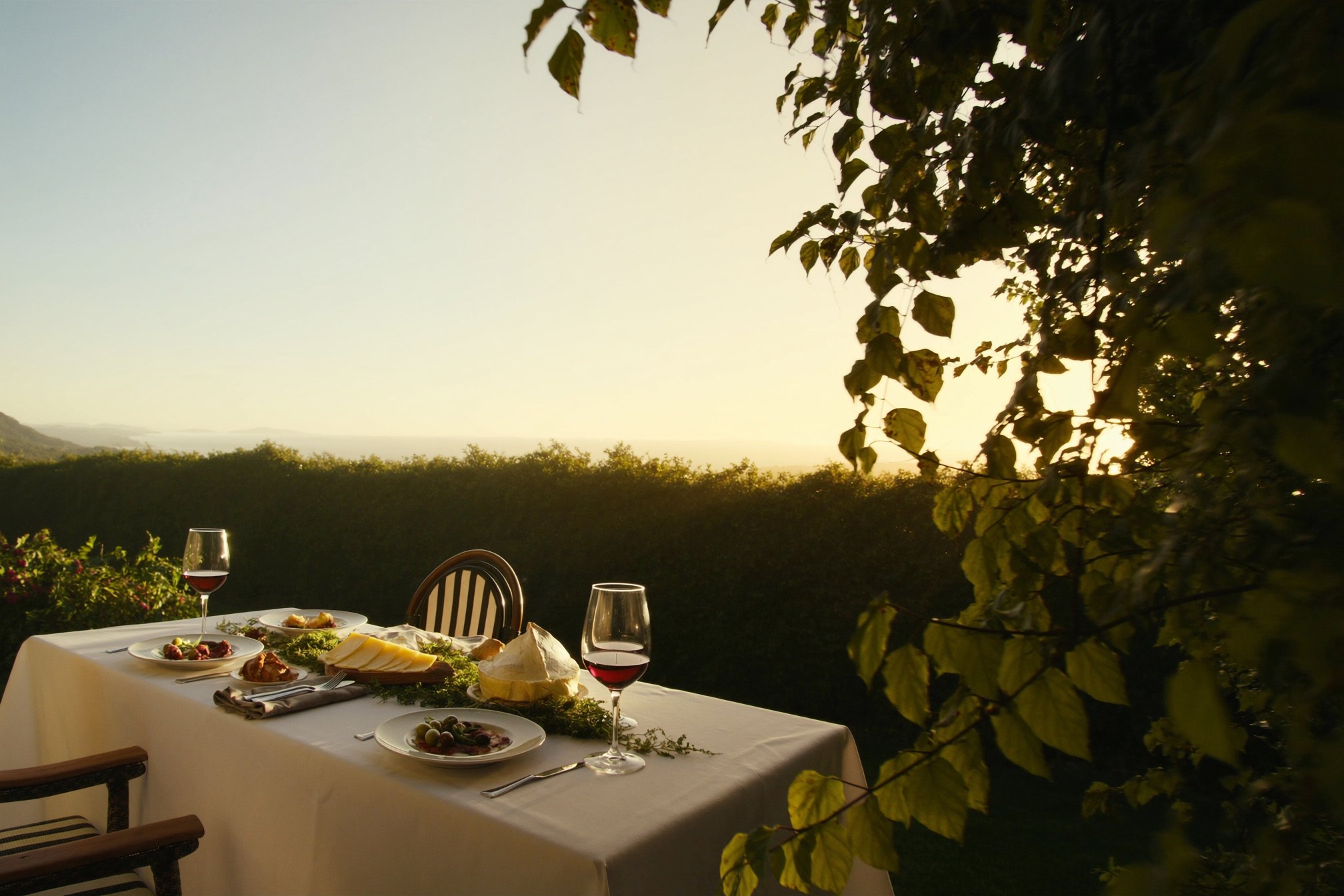
There's a bottle in most people's homes that they won't open. Not because it's rare. Not because they're waiting for a birthday or an anniversary or a dinner party with someone impressive. They won't open it because the night doesn't feel worthy yet.
The night is never worthy. That's the trap.
What "Saving It" Actually Means
We tell ourselves it's about occasion. But occasion is just a story we use to defer pleasure we feel slightly undeserving of. The good wine, the silk robe, the expensive oil — they sit in the dark waiting for a version of your life that feels legitimate enough to use them.
It's the same logic as the size you're waiting to be before you buy anything good. Same architecture, different shelf.
The bottle doesn't care. Wine peaks and then it falls. Most people open theirs three years past optimal and call it special. The robe fades. The oil goes rancid. The moment you were saving for arrived on a Tuesday two Aprils ago and you were watching something on your phone in sweatpants and you didn't notice.
The Ritual Is the Point
Here's what actually happens when you open the good bottle on a nothing night. You slow down. Not dramatically. Not in a way you could post about. Just — you stop moving through the evening like it's a thing to finish.
You find a real glass. Maybe you light something. You pour two fingers and smell it before you drink it, which you almost never do with the twelve-dollar bottle. You sit somewhere on purpose instead of wherever gravity took you.
The wine tastes like itself. But the ritual tastes like a decision — which is a thing most Tuesday evenings never offer you.
Luxury isn't the thing. It's the act of choosing it on a day that didn't require you to.
— MLL
What It Does to the Rest of the Night
This is the part that surprises people. One deliberate choice early in the evening tends to pull other choices toward it. You cook something real instead of assembling it. You put your phone down. You ask a question you actually want the answer to.
The conversation that happens over the second glass of something you actually chose is different from the one that happens over whatever was open. Not better in a therapeutic way. Just present. There's a reason the slow dinner tradition exists — it's not about the food.
Sometimes one person says something they've been carrying and the other one listens in a way they forgot they were capable of. Sometimes nothing happens except that you both sit in the same room on purpose for an hour. That's not nothing.
Where the Good Bottles Come From
Some people have one bottle. Some have six, accumulated from road trips up Route 29, from a Saturday afternoon at a small tasting room off the Dry Creek Road, from a harvest weekend they keep meaning to write about. A few bottles from Healdsburg, maybe one from a Yountville dinner where they spent too much and don't regret it.
The bottles become souvenirs of moments they were fully in. Opening one on a Tuesday is, in some quiet way, returning to that moment. Which is more than most streaming queues can offer.
The Argument Against Waiting
Special occasions are, statistically, a little disappointing. The birthday dinner where someone's tired. The anniversary where you're both performing romance because the calendar told you to. The New Year's bottle opened at midnight when you're mostly just relieved the year is over.
Engineered significance is hard to live up to. A Tuesday has no expectations. It just shows up. You can make it anything.
The couples who seem to have something going — not the ones performing it, the ones who actually do — they've usually figured out that ordinary nights are where the relationship actually lives. The weeknight date that actually happens beats the anniversary reservation you stress about for a week.
How to Do It Without Making It a Whole Thing
Don't announce it. Don't set an intention. Don't put it on the shared calendar. Just open the bottle.
Get two real glasses: not the ones in the back of the cabinet, the ones you actually like. Pour a little. Let it breathe for a minute while you change out of whatever the day put you in. Light one candle or don't. The candle is not the point. The choice is the point.
If you're alone, pour for yourself. The ritual doesn't require an audience. It requires intention. Self-care that's actually care is quiet and specific and tends to look like treating yourself the way you'd treat someone you're genuinely fond of.
What It Says
Opening the good bottle on an ordinary night is a small act with a specific message, mostly to yourself: this is enough of an occasion. I am enough of an occasion.
That's not affirmation language. It's just arithmetic. If you keep deferring pleasure until you've earned it by some standard you never defined, you will defer it until there isn't any left. The bottle will be gone. So will the Tuesday.
Drink the wine. Tell someone something true. Let the night be as good as the wine.
The bottle in this article is whichever one you've been walking past for three months. You know the one.



