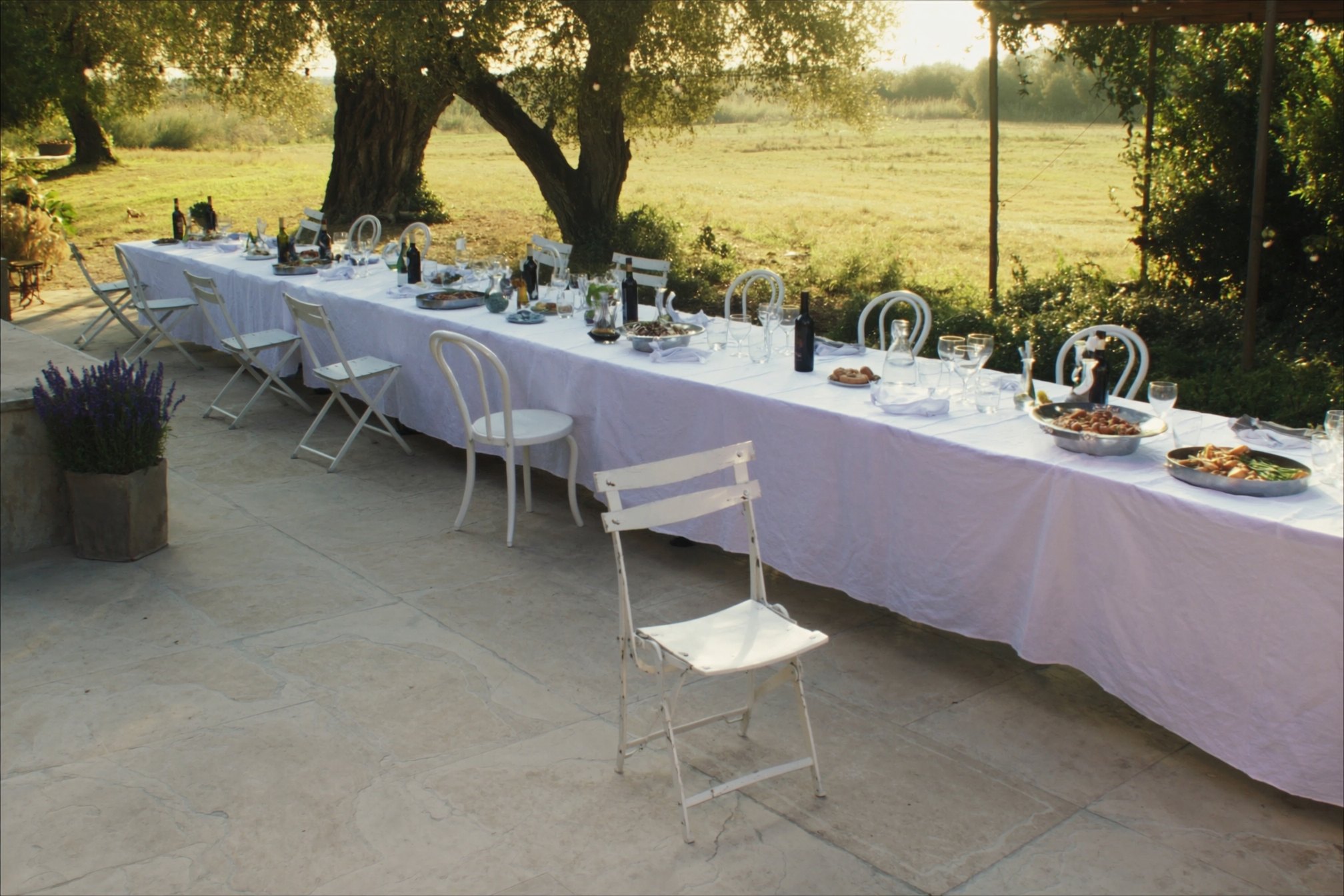
At some point, without discussing it, you stopped lighting the candle before they got home. The wine stayed corked until both of you were standing in the kitchen, still in work clothes, debating what to eat. The evening started when it started. Which meant it barely started at all.
The bottle already open when they walk through the door is a small thing. It is also not a small thing.
What the gesture actually is
It's a declaration made in private. Nobody witnesses it. You open the wine, pour half a glass for yourself, maybe stand at the counter for a minute with it. The apartment smells like whatever's warming in the oven or already done on the stove. You've changed out of the thing you wore to be productive. The evening has already begun — for you, alone, before they arrive.
That's the part nobody talks about. The transition isn't just logistical. It's interior. And doing it deliberately — before they walk in — changes the emotional temperature of the next three hours in ways that are hard to trace but completely real.
You can't manufacture a slow evening once it's already fast. You have to start slow.
The evening that starts too late
Most evenings stall on the threshold. Two people arriving from different days, both still partially somewhere else. Someone checks their phone while the other hunts for the corkscrew. The first twenty minutes bleed into logistics — keys, bags, what do we need, did you see the thing I sent you — and then you're both finally present but the night is somehow already half-spent.
The meal that could have been an event becomes dinner. The conversation that could have gone somewhere interesting stays surface-level because you never built a runway for it.
This is the pattern. It's almost invisible until you break it once.
What you're actually communicating
When someone walks in and the wine is already breathing on the counter, something registers before a word is spoken. You anticipated this. You wanted this. You thought about me before I got here.
That's not a small message to receive. Especially in a long relationship, where most arrivals are logistically neutral. Most homecomings are neither celebratory nor fraught. They're just... Tuesday. The bottle open on the counter says Tuesday is worth something. You walking through the door is worth something.
The mechanics of it
You don't need a wine country itinerary or a reservation in Yountville. You need about fifteen minutes and a decision.
The decision is: I'm going to be the one who sets the tone tonight. Not reactively. Not once we've assessed what kind of day we each had. Proactively.
Open something you actually like. A Dry Creek Zin. A Sonoma Coast Pinot. Something from that case you brought back from the tasting room on the Silverado Trail that you've been waiting for a reason to open. Tonight is the reason. Tonight is always the reason.
Let it breathe. Pour one glass. Put on something that isn't the news. Change your clothes — not into something theatrical, just out of the work thing. The physical act of changing registers sensorially in a way that mental switching doesn't. The soft weight of a robe or a worn linen shirt. Different skin for a different part of the day.
It works for solo evenings too
Worth naming: this works on nights when nobody's coming. The bottle open, the glass poured, the change of clothes — for yourself. The evening started before Netflix, before the scroll, before inertia made the decision for you.
A solo evening that begins intentionally has a completely different texture than one that simply happens to you. There's a version of this that resembles a woman at a hotel bar in Healdsburg, alone by choice, with a glass of something cold and excellent, fully present. That version is available at home. You just have to open the bottle first.
The reframe: anticipation is intimacy
We tend to think of intimacy as something that develops during an evening. The right conversation, the physical warmth that builds, the moment somewhere around the third hour when the masks come off a little.
But anticipation is also intimacy. Thinking about someone before they arrive — wanting the evening to be good for them, setting a tone that welcomes them into something already warm: that's relational care made visible in the most ordinary way possible.
It doesn't require a grand gesture. It requires fifteen minutes and the belief that the evening is worth beginning on purpose.
What couples who do this have in common
They've quietly agreed that the weeknight is worth protecting. Not every night. Not with performance. But often enough that it's become a pattern the other person can feel the absence of.
They've also stopped waiting for a special occasion to justify a good bottle. The occasion is: you live here, they live here, and tonight you'll eat dinner together. That's it. That's enough.
This connects directly to what makes a weeknight date feel real rather than forced. It's not the reservation or the initiative. It's the signal, sent early, that somebody decided this was worth something before it had a chance to prove itself.
Frequently asked
Does this only work if both people drink?
No. The wine is a stand-in for any deliberate sensory act: a pot of tea that's already steeped, a playlist that's already running, the room that's already lit differently than it was at 4pm. The point is the preparation. The substance is secondary.
What if one person always does this and the other never does?
That asymmetry is worth noticing. Not as a ledger item — but as information about who's currently holding the emotional temperature of the evenings. It can rotate. It probably should. But first someone has to say: I notice I'm always the one who starts the evening.
What if they walk in already upset?
Then the bottle on the counter does something different: it signals that you were hoping for a good night. That you wanted it. That the door was open. Sometimes that's exactly what a hard day needs to walk into — not an interrogation of how it went, but evidence that someone was already rooting for the evening.
How often is often enough?
Often enough that it stops being a surprise. Frequent enough that the absence is noticeable. Infrequent enough that it doesn't become invisible. That's a range, not a number. Most people find their rhythm around two or three times a week.
The bottle open on the counter. The glass already poured. The room already slightly different from the room it was an hour ago. The evening that began before you were both in it.
It costs almost nothing. It signals almost everything.



