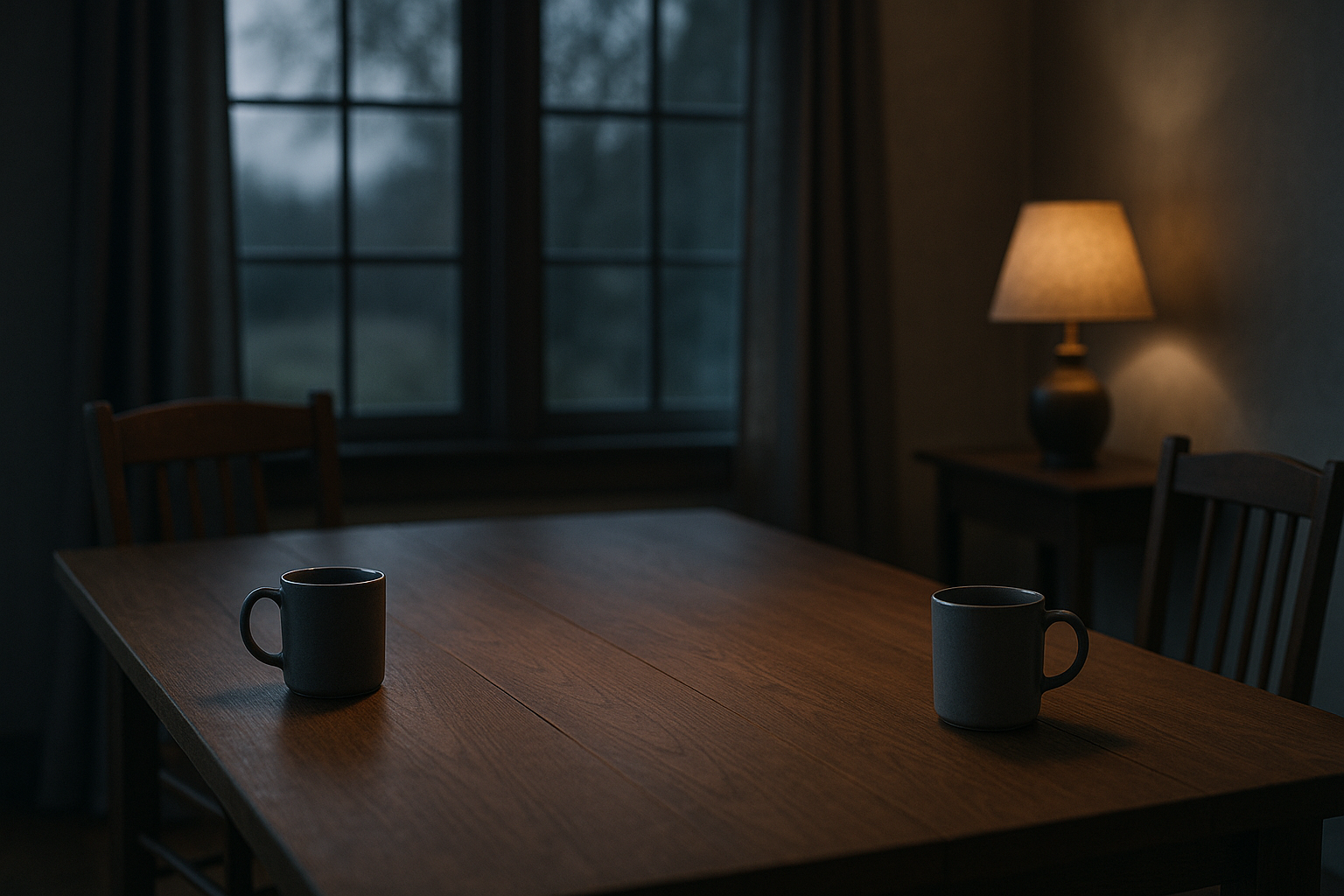
You're both on the couch. It's 9:47 PM. The show you're half-watching ended twelve minutes ago and neither of you turned it off. Your legs are touching. The energy in the room is doing something. You both feel it.
Nobody moves.
Not because you don't want to. Not because they don't want to. But because this thing — this specific standoff — has its own gravity. And somehow, mutually wanting it makes it harder to start, not easier.
What's Actually Happening in the Gap
This isn't about low desire. It's not about the second-year sex plateau or stress inverting your drive. This is about a moment where desire is present on both sides — and still nothing happens.
The gap is made of risk calculation. Fast, unconscious, constant.
What if I'm reading this wrong? Even in long relationships. Even when you've slept next to this person for years. The fear of misreading a moment doesn't go away — it just gets quieter and more embarrassing.
What if they say yes but don't mean it? That one's underrated. Sometimes you'd almost rather not ask than get a yes that feels obligatory. Obligation sex leaves a film on everything afterward.
What if I start it and it goes badly and now we're both just lying there? The fear of a failed attempt is real. Especially when you're tired, a little soft around the edges, not feeling like the most magnetic version of yourself.
Why One of You Became the Default Initiator — and Then Stopped
In most couples, someone historically moves first. And over time, that person carries a quiet weight: the exposure of wanting. The performance of desire. The possibility of rejection while the other person just... waits.
Eventually, that person gets tired. Not of wanting. Of always being the one who shows it first.
So they stop initiating. Not as a punishment. More like a quiet experiment: Will you start it this time? And the other person, unused to that role, uncertain how to signal interest without the usual cues, doesn't.
Now both people are waiting. Both people want something. The room fills with it. And no one moves.
The standoff isn't a lack of desire. It's a logjam of unexpressed desire with nowhere to go.
— Modern Love Living
The Face-Saving Problem
Here's the part nobody talks about: breaking the standoff feels like losing.
Not logically. Emotionally. Whoever moves first is the one who admitted they wanted it. They made themselves visible. And in some buried, irrational way — even with a partner they love, even in a safe relationship — that feels like a concession.
This is where the face-saving instinct kicks in. We want to be wanted without having to ask. We want to be pulled toward, not just met. It's not a character flaw. It's deeply human.
The trick is building a move that lets both people feel chosen simultaneously. Which is possible. It just requires one person to go first in a way that doesn't put the other person on the spot.
How One Person Breaks It — Without Making It Weird
The move isn't a speech. It's not a check-in. It's a gesture that creates an opening without demanding an answer.
Touch first. Talk later (or never).
Move closer. Put your hand on their knee. Slide your foot against theirs. Physical proximity that isn't a demand — it's an invitation. If they lean in, you have your answer. If they don't, you've lost nothing.
Change the setting, not the subject.
"I'm going to go take a bath" — said slowly, with eye contact, without immediately leaving. Sometimes all it takes is one person rerouting the night. They can follow. The option is open. You haven't asked anything.
Say the out-loud version of what you're thinking — lightly.
Not a declaration. Not a negotiation. Something like: "I've been thinking about you today." Short. True. With enough space between you that they can respond or they can just smile and it becomes the moment anyway.
Let the environment do some of the work.
There's a reason hotel rooms change the dynamic. Sensory context shifts permission. At home: dim the lights, pour something, put on music that isn't background noise. You're not setting a scene so much as removing the fluorescent overhead lighting of daily life. Same couple, different room temperature.
The Asymmetry You're Not Seeing
Most of the time, the person who breaks the standoff thinks they're the more vulnerable one. They went first. They showed their cards.
But consider the other person's position. They've been waiting. Wanting. Hoping. Wondering if tonight is the night someone moves. There's a particular tension in wanting something and doing nothing about it — a low hum of frustration, at yourself as much as anyone.
When you break the standoff, you don't just get what you want. You release them from that hum too.
That's not a small thing.
What to Do When the Standoff Has Gone On for Weeks
A one-night standoff is normal. A three-week standoff is a pattern. And patterns need slightly more than a light touch.
Not a full relationship audit. Not a scheduled intimacy talk. But a real, brief, outside-the-bedroom moment: "I feel like we've been kind of circling each other. Is that just me?"
That question is low-stakes and it names the thing without diagnosing it. It gives the other person room to say yes, or to say something you didn't know they were holding.
Sometimes the standoff is about desire. Sometimes it's about something sitting unresolved from three weeks ago. Sometimes it's just a rut — the same weeknight routine, the same tired hour, the same implicit understanding that tonight isn't the night.
The Real Question Under All of It
Why do we make the person who wants something feel like they're the one taking a risk?
That's the actual architecture of the standoff. Desire got attached to vulnerability, and vulnerability got attached to exposure, and somewhere in there the act of wanting started to feel like a liability instead of a gift.
It's not. Wanting your partner — showing it, saying it, moving toward them — is not a concession. It's not weakness. It's the whole point.
The standoff ends when one person decides that being wanted back is worth the two seconds of exposure it takes to go first.
It almost always is.