At some point, every couple develops a version of the story. How you met. Who said what first. The part that makes people smile at dinner parties. You've told it enough times that it flows without thinking. Comfortable, compact, kind of charming.
But the first version, the one you told your best friend two days after it happened, was longer. Messier. It had a detail or two that didn't make the final cut.
That's normal. That's also worth looking at.
Origin Stories Are Always Edited
Not dishonestly. Nobody's lying. It's more that over years, a story finds its shape through repetition. The parts that got awkward reactions get softened. The parts that earned laughs stay. The parts that are hard to explain to other people quietly disappear.
You were also seeing someone else when you met. You almost didn't go that night. The first month was chaotic and weird and you weren't sure what it was. One of you said something that should have been a red flag but wasn't, or was, and you both decided it wasn't.
None of that makes it into the version you tell at your friend's rehearsal dinner.
The story a couple tells about how they met is a compressed version of what they need to believe about themselves.
— MLL
What Actually Gets Cut
The complication that existed before you were official. The person one of you was orbiting. The fact that the timing was terrible and you both knew it.
The version of you that was kind of a mess that year, and how the other person chose you anyway, during that, which is actually the most important part.
The moment where it could have gone the other way. You got the text, you showed up, but you almost didn't.
Ambivalence gets cut. Desire, the kind that made you a little reckless, gets cut. Anything that sounds complicated to explain in under a minute gets cut.
Why the Editing Happens
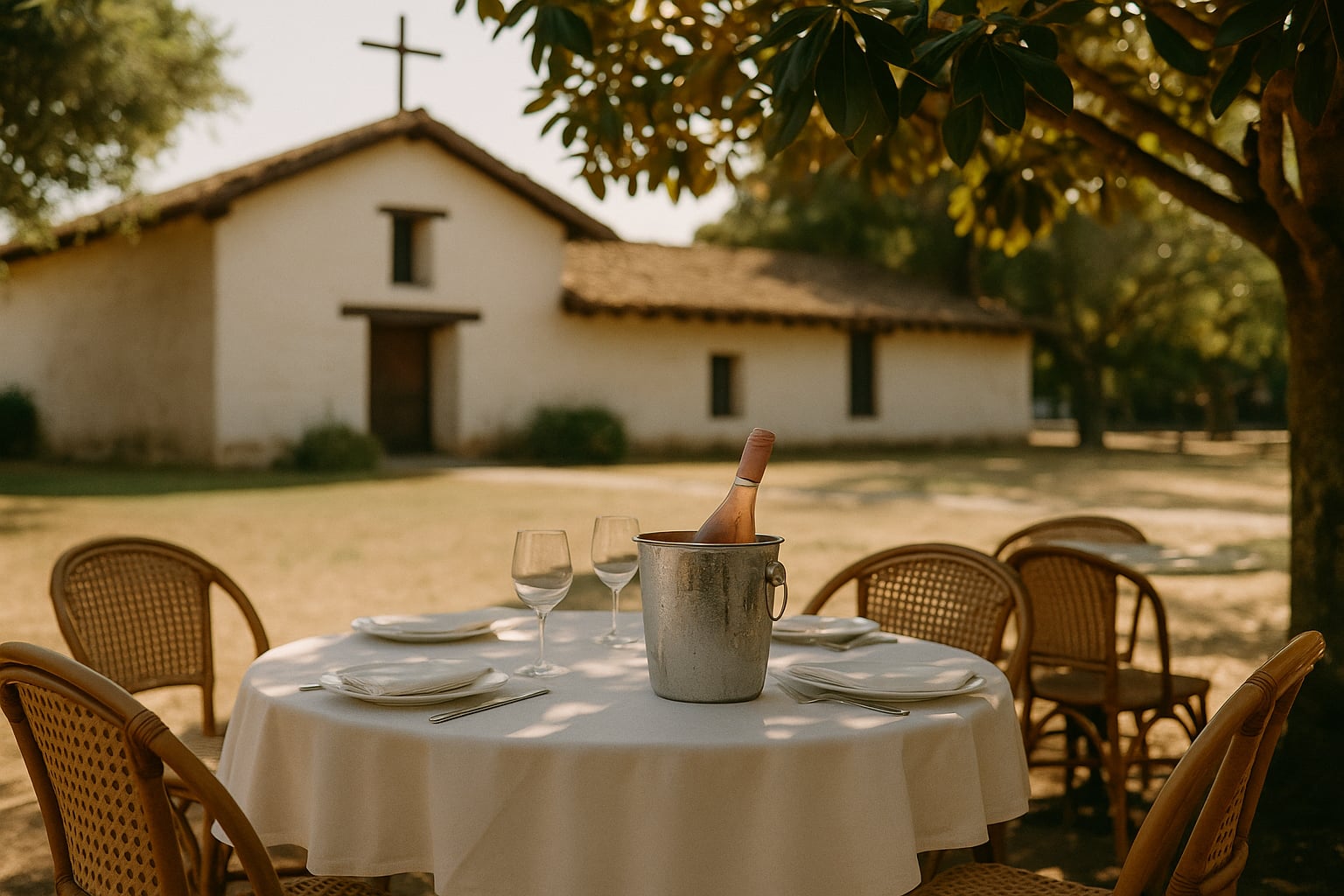
Part of it is social. Nobody wants to spend twenty minutes explaining the full context to someone they just met at a wine bar in Healdsburg. You condense it. That's reasonable.
But part of it is relational. The story you tell about how you met is also the story you tell about why you're still together. Change the story, and something about the foundation shifts. So it stays fixed.
There's also protection in the edit. The version where you both just knew, where it was easy and clear from the start, is easier to live inside. It doesn't require you to look at the fact that you chose each other under uncertain conditions, which means the choice is more real, not less.
When the Edit Becomes a Distance
Most couples edit. That's fine. The problem is when the edited version stops resembling anything either of you actually remembers, and you both know it, and neither of you says so.
That's when the origin story stops being a memory and starts being a myth. Not romantic myth. Maintenance myth. A version you both maintain because reopening the real one feels like too much.
It can show up small. You're telling the story again and you catch your partner's face doing something. A slight pause. The edit happening in real time, something remembered and then reconsidered and then left out. You see it because you know them.
Or you're the one doing it. You notice yourself skipping a part that used to feel too complicated to explain, and now you skip it automatically, and you don't entirely remember why it was complicated anymore.
What It Reveals About the Present
The story you tell about how you met isn't really about the past. It's about the current relationship's self-image.
A couple in a comfortable, secure place usually tells a fuller version. They can afford the complicated parts. The story where you weren't sure, or where one of you was difficult, becomes evidence of something: we figured it out, we're still here.
A couple in a harder place often tells a cleaner version. Tighter. Like they need the origin to be solid because other things feel less certain.
Notice that the next time you tell it.
A Simple Way to Test This
Tell the story the long way. Not to an audience. Just to each other, on a slow evening, the kind where you're not going anywhere. Sitting on the couch after dinner with a glass of something still in your hand, the lamp on, no phones.
Start from further back than you usually do. The context. What you were both like that year. What was actually happening in your life when you met this person.
Notice what comes back when you give it room. Notice what your partner adds that you'd forgotten, or corrects, gently, because your memory edited something theirs didn't.
Notice what still feels too tender to say, and whether that tenderness is grief or warmth or something you haven't named yet.
The Unedited Version Is Not a Threat
This isn't about dredging up problems or relitigating anything. The full story of how you met doesn't need to become a confessional.
It's that the complicated, uncertain, slightly reckless version of how you found each other is usually the more honest tribute to what you built. The version where it wasn't guaranteed is the version where the choice actually meant something.
The clean version protects you. The real version connects you.
You don't have to tell the whole thing to everyone. But it's worth knowing it yourselves.