Every long-term couple fights. The difference between the couples still genuinely in love at year twenty and the ones who are just coexisting is almost never conflict volume — it's repair quality. And repair, done honestly, reliably ends with both of you back in the same bed, awake, paying attention, and usually with the lights off. That part almost no relationship book will tell you outright. We will.
This isn't about performative make-up sex or pretending the fight didn't happen. It's about the specific sequence that the couples who've been doing this a while have quietly figured out: name the rupture, repair the nervous system, then let the body follow. Miss the first step and the third one always feels hollow. Hit all three and an ordinary Tuesday argument can end with one of the better nights of the month.
Name the rupture, short and specific
Before any physical repair, there has to be a verbal one. Not a relitigation — just a short, clean acknowledgment of what actually hurt. Two sentences each, not twenty minutes. "I snapped at you about the dishes and the dishes weren't the point. I'm sorry." "I heard you. I was already tired and it landed harder than it should have." That's the entire first step, and it can't be skipped. Skipping it is what produces the week of back-to-back sleeping.
The mistake most couples make is trying to resolve the whole disagreement before they let the body soften. You do not need to agree on the dishes. You need to agree that neither of you is out of the other's care. That's a much smaller bar, and it's the only bar that matters for the next hour.
Repair isn't about winning the argument cleaner. It's about letting both nervous systems back into the same room.
— Modern Love Living Editorial
Repair the nervous system before the rest
After a fight, both of you are physiologically jacked. Cortisol up, breath shallow, shoulders somewhere near your ears. Any physical intimacy attempted from that state is going to feel forced — because it is. The step nobody writes about is the ten quiet minutes in between: sit on the couch without a screen, shoulders touching, don't try to talk, breathe slow, let the body actually register that it's safe again. Ten minutes. That's the whole bridge.
In Wine Country homes we know, the repair ritual tends to be small and specific. A glass of something cool on the porch. A fire if it's winter. A shared shower, not as seduction but as contact. The shared shower after a fight is one of the most under-used relationship tools in existence. Skin, warm water, the same soap, no obligation to talk. It resets the day faster than any conversation can.

Let the body lead the last step
The sex that happens after a well-repaired fight is different from regular sex, and the couples who've been together a long time know this. It's slower. More eye contact. A different kind of attention. Not make-up sex in the movie sense — that's usually performance. More like a physical echo of the repair itself: I see you, we're okay, I'm still here. The room doesn't need to be elaborate. A candle lit, the lights off, unhurried hands. That's the whole setup. The rest runs on the repair you already did.
If either of you is not there yet, don't push. The bridge might be a long hug and falling asleep touching. That also counts. Repair sex is not required for the repair to have worked. But when it does happen, it tends to be disproportionately good — because the honesty of the preceding hour carries into it.
The intimate layer — the post-repair nightstand
The specific items that help the last step work: a body oil that smells neutral enough to use in any mood, a lubricant that doesn't require drawer rummaging (because fumbling at this moment is a spell-breaker), a candle lit before either of you walks into the room, a glass of water on each side of the bed. Nothing flashy. Everything already in position.
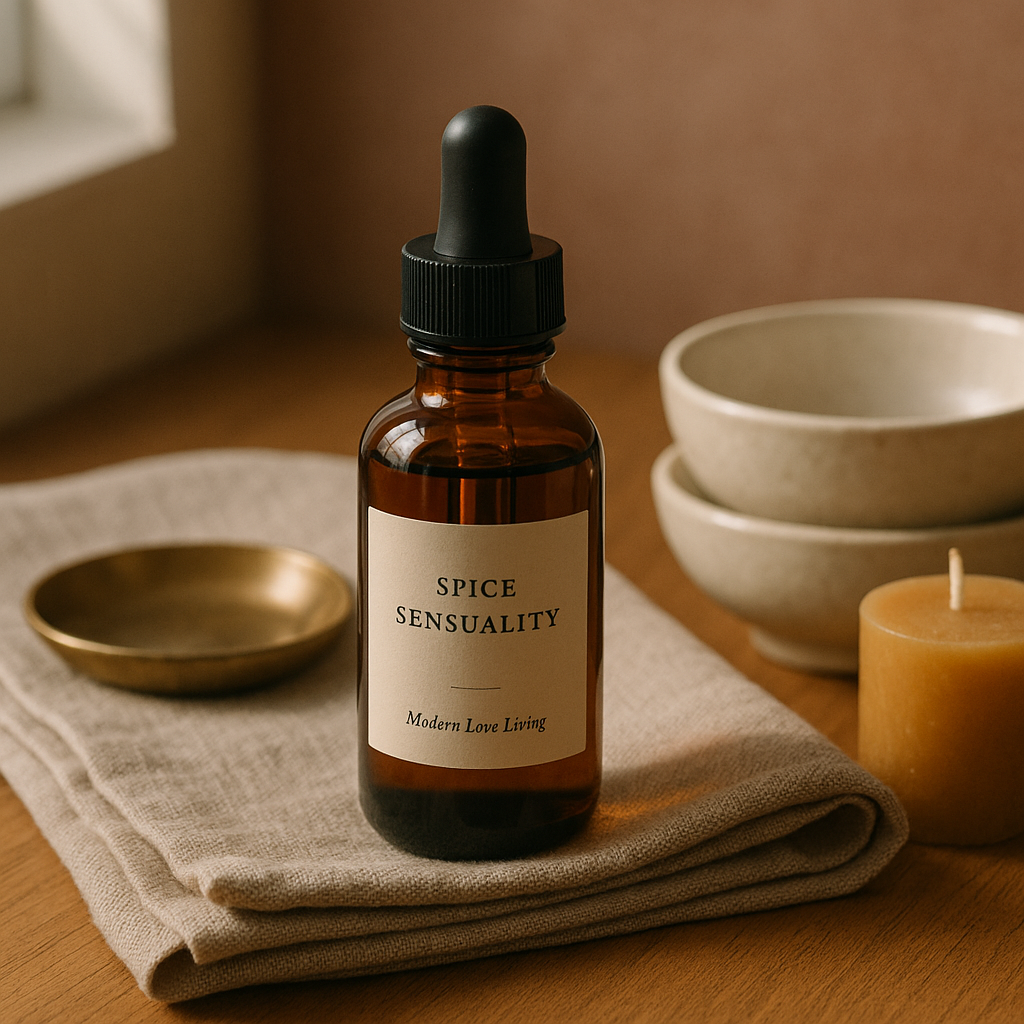
Our editors build this off the Spice Sensuality couples' shelf and leave it in a pre-set state at all times. The whole point of a nightstand built on purpose is that, on the nights the hour needs it most — including after a fight — nothing has to be decided. The couple that invests thirty minutes in a nightstand once earns dividends on it for years.
Repair nights are not romantic in the Hallmark sense. They're a quieter, more grown-up kind of intimate: two adults who had a bad hour and are choosing, on purpose, to find their way back to each other before the night ends. Couples who learn this reliably are the ones who look, from the outside, like they never fight. They do. They just know how the night ends.