Nobody makes a card for the day you stopped explaining her to your mother. There's no aisle for the morning you both realized you'd been together longer than either of your parents' first marriages. No ribbon. No registry. No toast at a rehearsal dinner where someone's uncle cries on cue.
Queer relationships collect milestones the culture hasn't named yet. And that fact carries two things at once: a specific kind of freedom, and a specific kind of loneliness.
The Script Exists. You Just Don't Have Access to It.
Most couples — straight, partnered young, conventionally structured — inherit a timeline. Dating. Exclusive. Meet the family. Move in. Propose. Marry. The steps have greeting cards, Instagram captions, and a whole industry ready to celebrate each one.
Queer couples get handed a blank calendar and told to figure it out.
Sometimes that's genuinely liberating. You build exactly what you want, unmarred by tradition or someone else's expectations. The relationship looks like you. But liberation has a shadow side: no external validation, no cultural checkpoint that says yes, this counts, this is real, this is worth celebrating.
You end up doing that work yourself. Every time.
Milestones That Don't Have Names
There's the first time you called him your boyfriend out loud to a stranger — not a friend, a stranger — and neither of you flinched. That's something. That's enormous, actually.
There's the first time you booked a hotel room and wrote both names without checking who was at the front desk first.
There's the conversation — usually at 11 PM, always on a random Tuesday — where you tried to figure out what anniversary you're even celebrating. The night you met? The night you admitted it? The day the last relationship technically ended? You landed on something arbitrary and felt slightly stupid about it and then felt a little tender about it too.
There's the moment you both stopped code-switching at family dinners — not with drama, just quietly, together. One year he just said we at the table and no one made a thing of it and that was somehow the biggest deal of the decade.
Why the Ache Is Real
It's easy to romanticize building your own road. Harder to admit that sometimes you just wanted the road that was already there.
Not the wedding industrial complex, necessarily. Just the knowing. The cultural shorthand that says: three years in, you celebrate. Five years, you take a real trip. Ten years, the people who love you throw a party.
Without that, you're always doing a small calculation. Is this worth making a thing of? Are we being dramatic? Is this what commitment looks like or just what we've gotten used to?
We didn't know if what we had was a relationship or a situation until we'd been in it for two years. And then we realized we'd been treating it like a situation for two years, and we had to grieve that a little.
— overheard, Healdsburg plaza, October
That grieving is legitimate. Not dramatic. Not ingratitude for the freedom. Just honest.
The Reframe: Inventing It Is the Point
Here's what's actually true, and it's not a consolation prize: the milestones you invent are more specific to you than any Hallmark category could ever be.
Your anniversary is the night you stayed at Indian Springs and she told you something she'd never said out loud before. Not a date on a calendar — an actual memory with a smell and a temperature and the weight of her voice in the steam.
Your commitment marker is the weekend he put your name in his phone as an emergency contact without telling you until you saw it by accident. That's not nothing. That's everything.
The absence of inherited script means you had to pay attention to each other to know what mattered. Most couples coast on the structure. You couldn't. So you noticed more.
How Queer Couples Actually Mark Time
Some build rituals from scratch. A specific restaurant every year, not because it's fancy but because it's theirs. A playlist. A trip to the same stretch of coast. One couple we know does a yearly letter: handwritten, sealed, given on the day they consider their anniversary, which is a date only the two of them understand.
Some lean into chosen family in a way that functions like the wider celebration straight couples get automatically. A dinner with the people who were there, who knew, who witnessed. That table at the Sonoma back road spot where everyone knows your order and someone always brings good wine.
Some just say it plainly: this is our anniversary and we're going somewhere nice, without apologizing for inventing the occasion. That directness is its own kind of maturity.
What This Looks Like in Practice
She booked two nights at Solage for no occasion. Just told him: I want to celebrate that we're still choosing this. He said, that's embarrassingly romantic. She said, I know. They went.
They didn't call it an anniversary. They didn't need to. They already knew what it was.
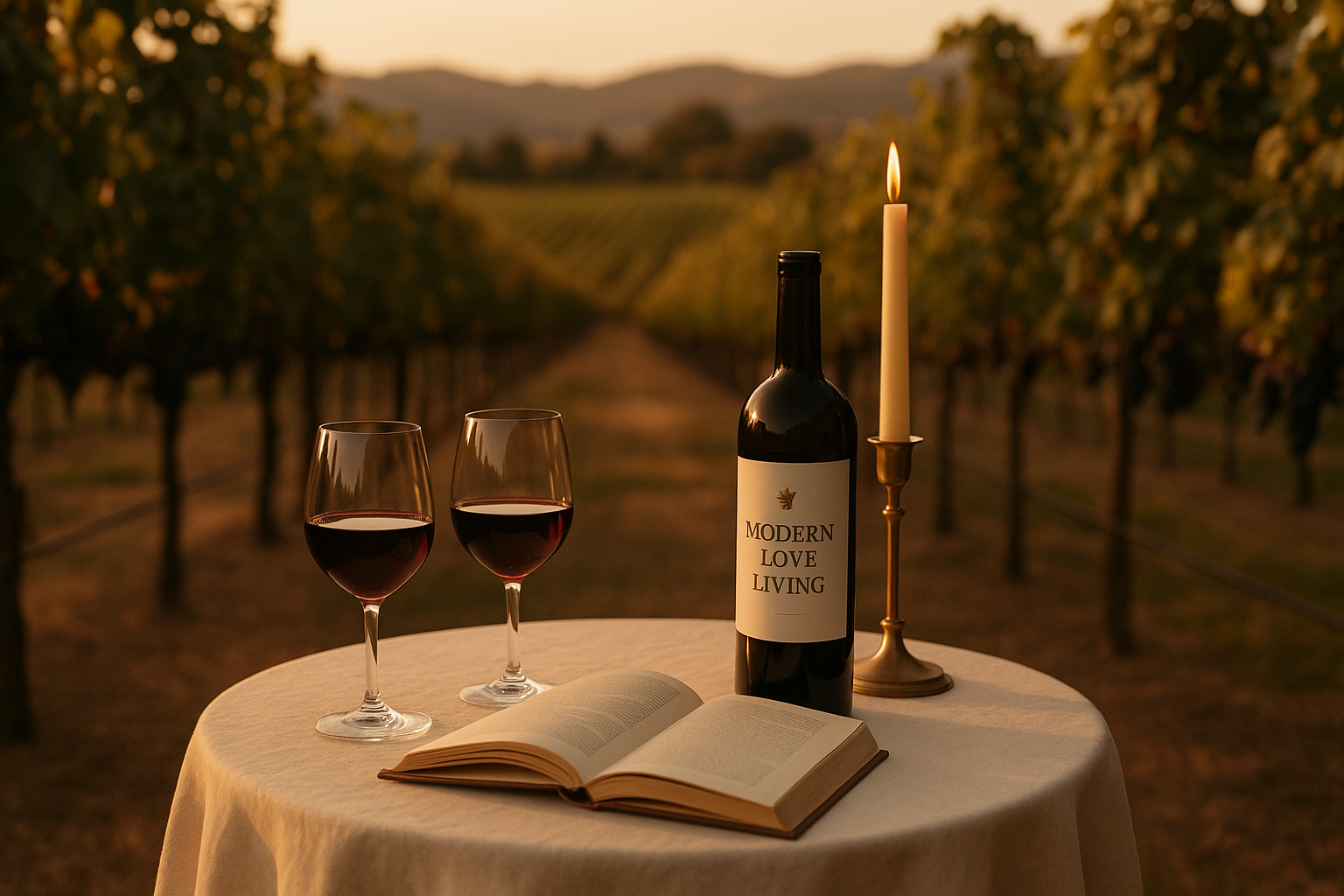
That's the move. Stop waiting for the card that doesn't exist. Make the reservation. Light the candle. Open the bottle you've been saving. Say the thing you've been thinking for three years: I don't know exactly what we are on paper, but I know I'm not going anywhere.
That's a milestone. It just doesn't come in an envelope.
FAQ: Queer Relationships and Commitment Milestones
How do queer couples decide what anniversary to celebrate?
Usually through a negotiation that's part practical, part emotional. Some count from the first date, some from when they went exclusive, some from a specific conversation that felt like a turning point. The date itself matters less than the agreement to honor something.
Is it normal to feel grief about not having traditional relationship markers?
Yes. Fully. Wanting the cultural shorthand isn't the same as wanting a conventional relationship. It's wanting your relationship to be seen and named by the world around you. That's a real need, not a weakness.
How do queer couples build commitment rituals without a blueprint?
They pay attention to what actually means something to them, not what's supposed to. An annual trip, a private letter, a dinner with chosen family — specificity beats tradition every time. The ritual works when both people understand why it's theirs.
What counts as a real milestone in a queer relationship?
Anything that changed something. The first time you introduced them without hedging. The first time you felt safe in a room together. The first time neither of you thought about the exit. Those are real. They count. You don't need external validation to make them so.



