You've seen them. Standing on the Healdsburg plaza, golden hour hitting just right, her head tipped against his shoulder, both of them looking like they wandered into a life that fits perfectly. The caption says something low-effort. The likes are immediate. And somewhere in your chest, something small and complicated happens.
The question isn't whether their relationship is real. It probably is. The question is what happened in the twenty minutes before that photo was taken — and why we've all silently agreed not to talk about it.
The Edit Is Not the Lie. The Framing Is.
No one posts the argument in the car. No one posts the moment one of them said fine, forget it and looked out the window for twelve miles. No one posts the negotiation about whether they're even posting at all, which is its own miniature power struggle dressed up as a creative decision.
This isn't a new observation. But we keep acting like it is, which means it still has teeth.
The lie isn't the photo. The lie is the implication that this is what their relationship is — that the image represents the texture of their daily life, not just the forty seconds they managed to align on something beautiful.
What 'Effortless' Actually Requires
Curated couple visibility takes real work. Not good work, necessarily. Just work. Someone has to want the photo more than the other person. Someone angles the camera. Someone checks the result and says one more. Someone holds their smile a beat longer than feels natural.
That's a small thing. Except it scales.
When one person is consistently the one who wants to document, who curates, who manages the couple's public identity — that's a dynamic, not a quirk. It determines who feels seen and who feels performed. It shapes what a good day looks like. It quietly sets the stakes for what their relationship is for.
The Gap Between the Relationship You Describe and the One You're In
There's a version of your relationship that exists for other people: what you say at dinner parties, what you post, how you introduce each other, which stories you tell. And then there's the one that happens at 11pm when neither of you has the energy to be your best self.
Most relationships are fine. Genuinely fine. The problem comes when the public version gets so polished that the private version starts feeling like a failure by comparison.
You stop having the unremarkable Tuesday because you're vaguely aware that Tuesdays should look a certain way. You retake the Solage pool photo not because the first one was bad, but because it didn't match the version of the weekend you'd already written in your head.
We spent forty minutes getting the shot and maybe ten minutes actually being there.
— unnamed, but you know someone who's said this
What's Actually Happening Off-Frame
Off-frame is where the relationship actually lives. The kitchen counter conversation that goes nowhere. The way one of you always falls asleep first. The recurring disagreement that has a shape but no resolution.
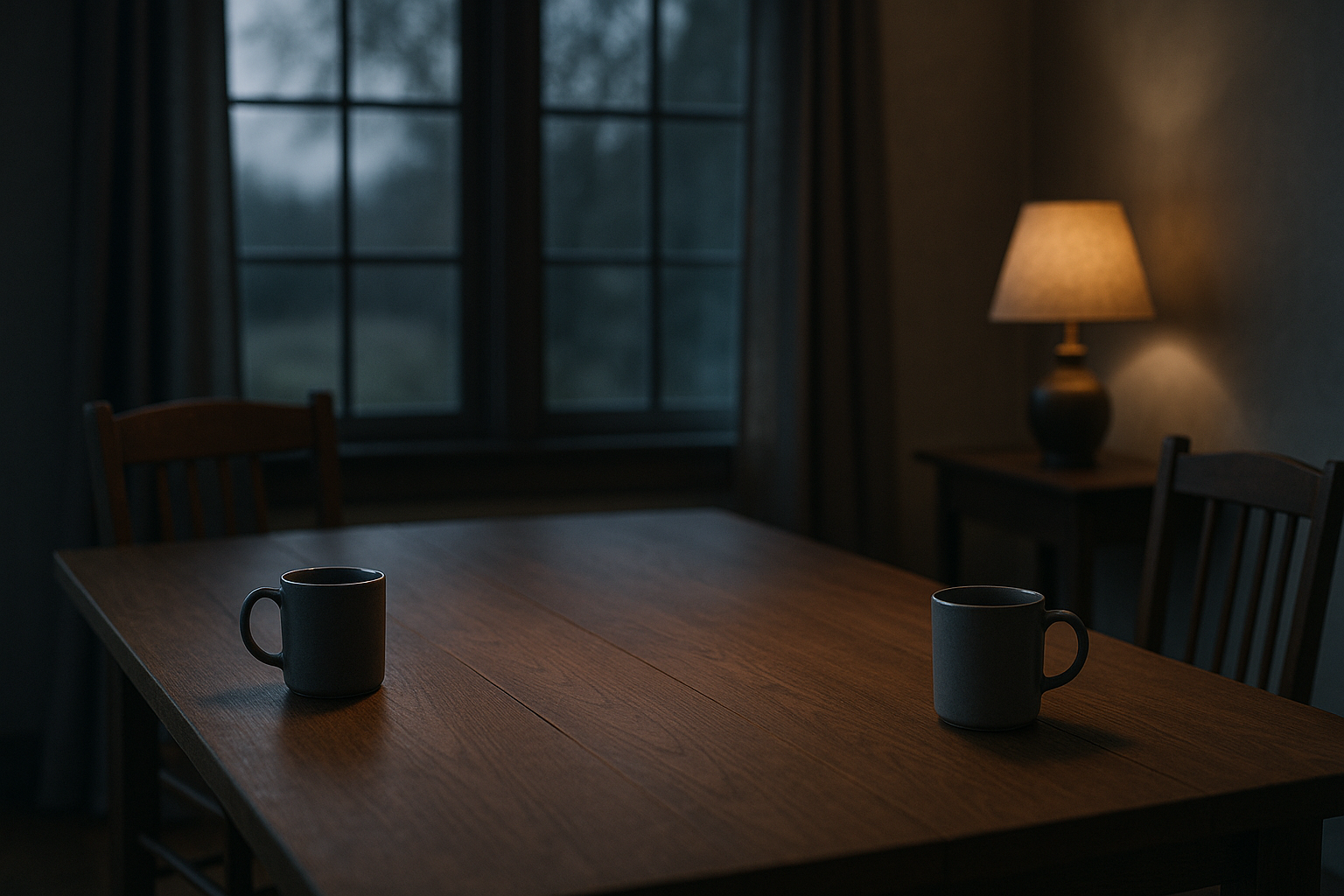
Off-frame is the morning when the coffee is ready but nobody said thank you because that stopped happening somewhere around month fourteen. It's the sex that was good but not the way you'd expected, and the silence after that was comfortable instead of charged, and whether that's growth or loss you genuinely can't tell.
None of that makes a caption. All of it is the relationship.
The Audience Problem
Once there's an audience — even a small one, even just your close friends who follow you — the relationship starts performing for them in small ways. Decisions that used to be private get filtered through an imagined reaction.
This isn't vanity, exactly. It's what happens when humans, who are inherently social creatures, get a feedback mechanism attached to their intimacy. The dopamine from the post and the dopamine from actual connection start to blur.
The couples who seem to navigate this best aren't the ones who quit social media in some dramatic announcement. They're the ones who made a quiet agreement about what stays off-frame. Not because they're hiding something. Because they protected something.
Soft-Launching vs. Actually Arriving
There's a difference between introducing someone into your life and introducing them into your feed. The first one takes time and vulnerability. The second one takes a good angle and a Sunday with decent light.
The soft launch culture — half a shoulder here, a tagged location there — isn't necessarily dishonest. But it can become a way of rehearsing commitment without making it. Performing the arrival before you've actually decided to stay.
That gets complicated fast. Because the audience responds, and the response feels like validation, and suddenly the relationship exists partly to generate that response. Which is a weird thing to realize at 2am when everything is quiet and you're looking at the person next to you trying to remember what you actually feel.
What Effortless Actually Looks Like
Real ease in a relationship is almost unphotographable. It's the weight of someone's hand on the back of your neck that you don't even register anymore because it's just there. It's the shorthand that sounds like nothing to anyone else. It's the drive down the Sonoma backroads where neither of you is performing.
It doesn't look like the plaza photo. It looks like two people who forgot they were being watched. Which is, of course, the exact thing that's impossible to post.
The One Question Worth Asking
Not: Does our relationship look good?
Not even: Is our relationship good?
Just: When no one is watching and there's no photo to take, is this where I want to be?
That's it. That's the whole audit. The answer, whatever it is, doesn't need a caption.