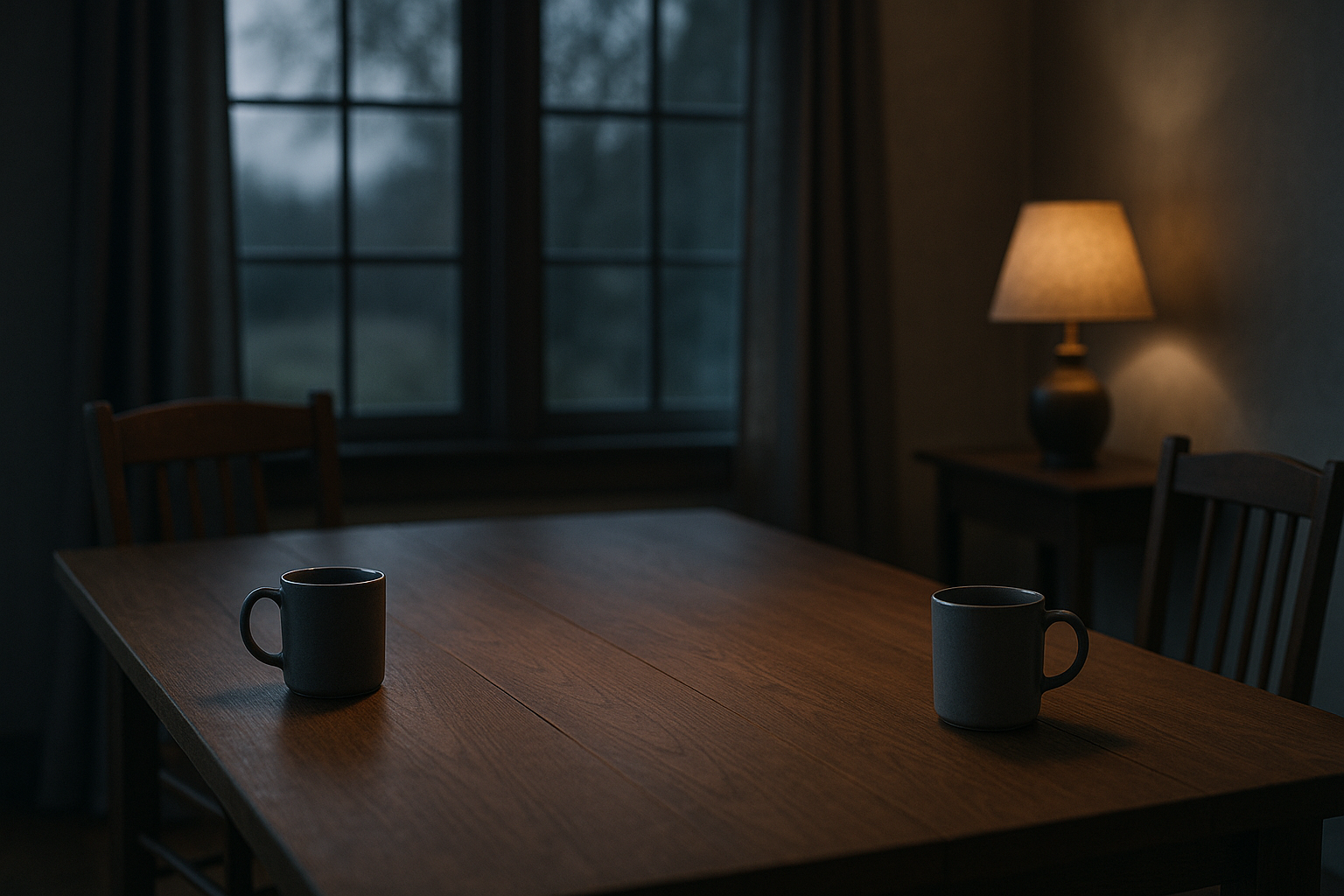
You're both home. Dinner is done. The night is technically free. And you still feel like you're eating alone at a table for two.
This is the part nobody names cleanly. Not distance. Not a fight. Not neglect in any way you could point to on a map. Just the specific loneliness of being next to someone who has checked out while remaining physically in place.
It's a strange kind of ache. Because you can't exactly complain. They're right there.
The Body That Stayed, the Attention That Left
Availability is logistical. It means no conflict on the calendar. No work call, no other obligation, no physical barrier. It means the body showed up.
Presence is something else entirely. It's where the attention actually lives. And those two things can diverge so quietly, over so many months, that by the time you feel it, you can't trace back to when it started.
The phone is the obvious villain, and yes, the phone is often part of it. But it's not only the phone. It's the thousand-yard stare over your shoulder while you're talking. The "mm-hm" that confirms nothing. The way a kiss gets returned with the same energy as a reflex. Present enough to respond. Nowhere near enough to connect.
Why It Registers as Rejection
Here's what makes it sting more than regular distance: you made yourself available too. You cleared the night. You were ready, in whatever way — for a real conversation, for closeness, for sex, for just sitting together with actual weight behind it.
And then nothing landed.
The nervous system doesn't parse the reason. It just registers: I reached, and the reach didn't connect. That reads as rejection whether it was intended as one or not.
Over time, you adjust. You stop reaching. You start performing your own kind of half-presence, because going fully open into an empty room too many times teaches you not to.
The saddest version of this is two people sitting three feet apart, both of them waiting for the other one to actually show up.
— MLL
It's Not Always What You Think It Is
The absence usually isn't personal. That's the reframe, and it's genuinely hard to hold.
Someone can be physically beside you while their nervous system is still stuck at 4:30 PM in a meeting that didn't go well. Still composing a reply to an email they haven't sent. Still processing something they haven't figured out how to say. Absent not because of you. Absent because they haven't made it out yet.
This doesn't make the loneliness less real. It just means the story you're telling yourself — they don't want me, they're bored, something has shifted — might not be the accurate one.
It might just be: they haven't landed yet. And nobody called that out.
The Micro-Behaviors That Tell the Truth
You can usually feel the difference before you can name it. Presence has texture. When someone is actually there, eye contact has a little more weight. Touch initiates differently, like it means something rather than just checks a box. Silence feels shared instead of parallel.
Absence has texture too. The way someone's gaze moves over your face without landing anywhere. The hug that's over before it starts. The way the conversation keeps hitting a surface and sliding off.
And in bed: the difference between someone who is with you and someone who is going through a motion they've memorized. Both technically available. One of them somewhere else entirely.
What to Do With the Gap
Not: spiral. Not: make it a big conversation when neither of you is in the right state. Not: perform neediness hoping they'll notice.
The smallest honest move is often enough. Not a confrontation. Just a gentle redirect. Hey. I feel like we're both kind of elsewhere tonight. That's it. No accusation. No score. Just naming the weather out loud.
Sometimes the other person doesn't even know they drifted. Having it named gives them the chance to come back. Which is different from demanding they come back.
And sometimes you need to ask yourself the harder version: have you been present? The gap is rarely one-directional. Most couples who've been together long enough have developed matching habits of low-grade checked-outness that they've just stopped seeing.
Presence as an Intimate Act
Real presence costs something. It requires actually setting down what you were carrying. Not forever — just for the next hour. The heat of the shower still on your skin. The robe still loosely tied. The wine barely started. All of that sets a stage that doesn't automatically fill itself.
There are couples who've made a ritual of it. Fifteen minutes of actual arrival when they get home. Not talking about logistics. Not starting the next task. Just the deliberate act of coming back into the same room as a person, not just a floor plan.
It sounds small. It's not. The couples who do this consistently report that sex is better, conversations are easier, and the ambient feeling of disconnection stays lower. Not because of some grand gesture. Because presence, practiced quietly and often, becomes its own kind of intimacy.
The Honest Bottom Line
You cannot be rejected by someone who isn't actually there. But being ignored by someone who is technically available? That one lands. That one leaves a mark.
The solution isn't a system. It's a decision, made repeatedly. To land. To arrive. To put the unfinished thing down for an hour and actually be in the room you walked into.
Not because you should. Because the person on the other side of the couch is waiting for you to show up, and they've stopped saying so out loud.