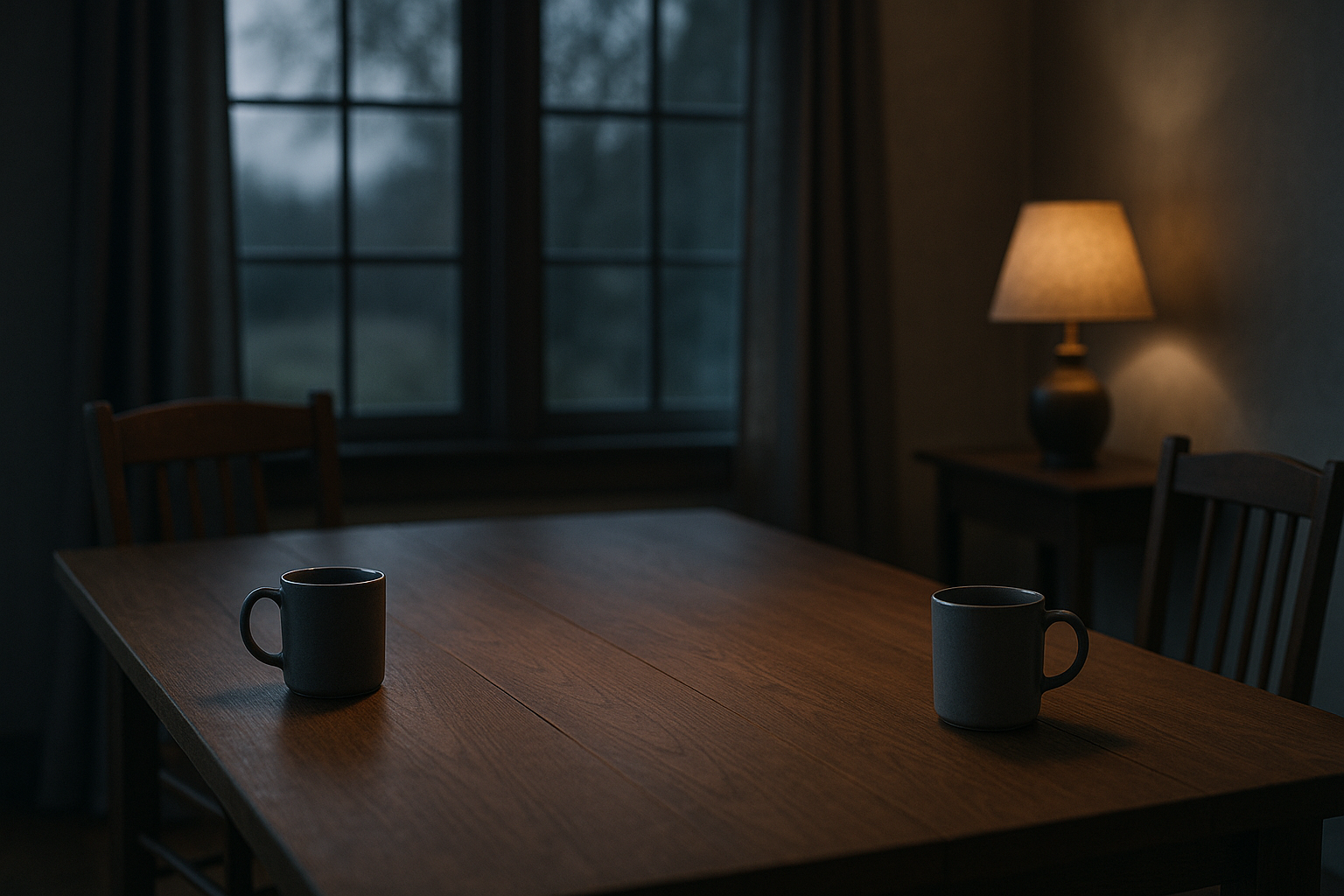
There's a version of you your partner fell for. Curious. A little funny. Present enough to notice small things: the way light hits a glass of wine, the detail in a story someone else would skim past. Easy to be near.
Then a hard season hits. Work, money, family, health. Something. And that person doesn't leave dramatically. They just go quiet. Slowly replaced by someone who is technically still there but running on fumes and friction.
Your partner notices. They don't always say it. But they're waiting.
Stress Doesn't Change You — It Narrows You
This is the part people get wrong. Stress doesn't reveal your true self, some darker, realer version underneath the good behavior. It compresses you. Reduces bandwidth. The warmth is still there. The humor is still there. They're just behind a door that's suddenly very hard to open.
What your partner experiences isn't the real you. It's a you with most of the soft tissue stripped away, operating on cortisol and to-do lists.
You didn't become someone else. You became a smaller version of yourself with worse lighting.
— MLL
The problem is that smaller version still makes decisions. Still responds to texts. Still shares a bed. And the gap between that version and the one your partner knows starts to accumulate, quietly, like debt.
What Actually Goes Offline First
Not the big things. The small ones. That's what makes it so easy to miss.
You stop asking follow-up questions. You listen to respond, not to understand. The inside jokes dry up. You give answers instead of starting conversations. You're in the same room but behind glass.
Physical presence quietly changes too. You used to reach over in the middle of a movie. Now you're both on your phones, technically together, actually nowhere near each other.
And your partner adapts. They give you space because they can read that you need it. They stop initiating certain conversations. They start handling things alone to protect you from more weight. This looks like support. It is support. It's also the beginning of two people living slightly parallel to each other.
Your Partner Has a Name for This Season
They won't always say it out loud. But inside, they have a word for this period. Something like: hard. Or distant. Or just: waiting.
The waiting part is underrated. A partner who loves you doesn't panic when stress narrows you down. They wait it out. They stock the fridge and leave you alone and don't take it personally when you're curt at 7 PM after a brutal day.
But waiting costs something. It takes faith that the person they love is still in there. And every day that person doesn't reappear, that faith needs a small top-up.
When couples come out the other side of a hard season without having tended to each other at all, they often find themselves in a strange place. The stress resolved. The relationship somewhere it wasn't before. Not broken. Just rearranged in ways nobody fully agreed to.
The Micro-Moments That Still Count
Here's what doesn't require you to be at your best.
A real answer when they ask how you're doing. Not fine, not brutal, but the actual one: I'm running on empty and I miss being normal around you. Twenty seconds. You don't have to fix anything.
Touch that has no agenda. Not sex, not even tenderness exactly. Just a hand on a shoulder that says: I still know you're here. Weight of a palm. Specific, quiet, enough.
One question you actually want the answer to. Not about logistics. About them. What they're reading, what they're dreading, what made them laugh today. It takes thirty seconds. It breaks the glass.
These aren't tricks or techniques. They're just proof of life from the version of you that went quiet.
The Thing You Don't Notice Until Later
When the pressure finally lifts, there's sometimes a strange flatness. You expected relief to feel like something. A return. But you're both out of the habit of each other.
A weekend in Healdsburg sounds easy. A slow afternoon at Solage, steam room, no agenda. But you sit across from each other at dinner and realize you've been having surface-level conversations for four months and now the depth feels unfamiliar. Not gone. Just rusty.
This is normal. It's also the moment most couples mistake for something worse than it is. The relationship isn't broken. It just needs to remember itself.
Who Goes First
Usually the one who isn't actively underwater. That's not a rule. It's just what tends to happen.
If you're the one waiting: say it, gently and without accusation. I miss you. Not in a needy way. In a you're-one-of-my-favorite-people way and I'd like them back.
If you're the one who's been under: acknowledge the gap. You don't have to apologize for being human under pressure. But naming it lands. I've been somewhere else. I know. I'm trying to come back.
Neither of these conversations need to be long. They just need to happen before the silence becomes the default.
Your partner isn't keeping score. They're just keeping faith. The least the relationship deserves is for you to notice that — and to let the version of yourself that went quiet know it's safe to come back.