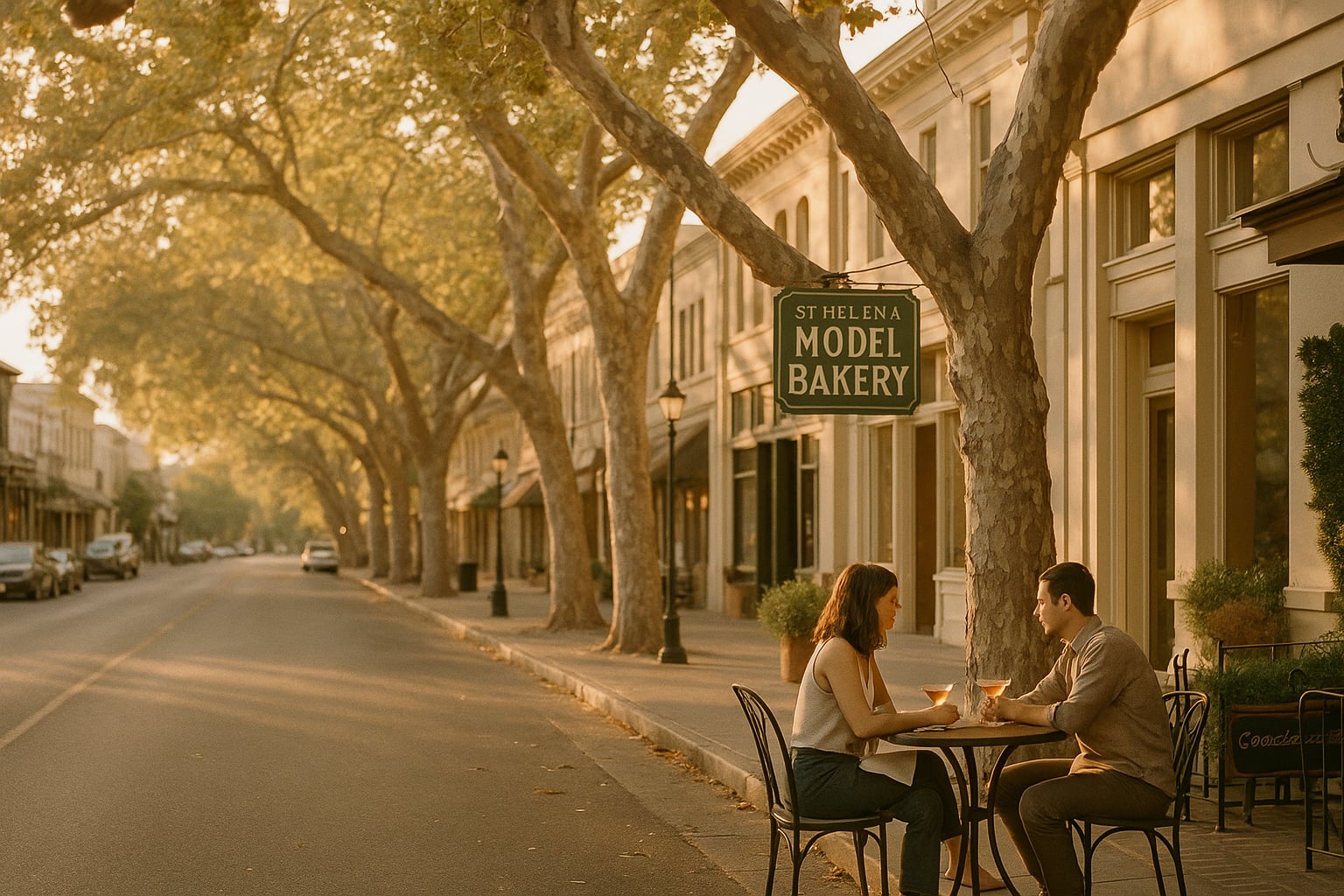
There's a kiss that happens every morning in this country that nobody is really present for. It lands somewhere near the jaw. It takes less than a second. It's not unkind. It's just — nothing. Muscle memory wearing the costume of affection.
The hand that lands on a lower back while squeezing past someone in the kitchen. The squeeze of a shoulder while walking by. The arm that wraps around during a TV show and stays there, motionless, until one of you gets up to refill a glass.
All of it looks like love from the outside. From the inside, both people know something different. They just don't say it.
What Habitual Touch Actually Is
Habitual touch isn't bad touch. It's not absence. It's the category between presence and absence that's almost harder to name — the physical equivalent of saying "fine" when someone asks how you are.
It starts as real contact. Then it gets repeated. Then the repetition becomes the point. Then neither of you are actually in it anymore — you're just executing the gesture, the way you execute unlocking a door or hitting snooze.
The body is smart. It notices when it's being handled versus touched. It notices when there's no warmth behind the hand, no weight behind the hold, no actual attention directing the contact. And it adjusts. Quietly, over time, it stops anticipating anything from that stimulus. It files the gesture under routine rather than connection.
The Neuroscience Isn't Abstract
Touch releases oxytocin. You've heard that. What you hear less often: that response is context-dependent. The nervous system reads intentionality. It reads presence. It reads whether the person touching you is actually there, or somewhere else entirely.
A hand placed with attention — slow, deliberate, tracking your response — lands differently in the body than the same hand going through motions. Same location. Different signal entirely.
This is why the nervous system is the real erogenous zone. Not body parts. The part of you that decides whether to stay open or quietly close.
Habitual touch trains the nervous system to close. Not dramatically. Just incrementally. The same way you stop tasting a wine you drink every night without thinking.
What Goes First
The first thing that goes is anticipation. Early in a relationship, your skin is basically tuned to the other person's proximity. They cross the room and something in you notices. That attention is not infinite. It has to be fed.
The second thing that goes is reach. You stop initiating touches that aren't task-adjacent. The hand that used to find the back of a neck for no reason. The fingers that laced together on a walk that wasn't going anywhere. Those disappear so slowly you don't clock them leaving.
The third thing: skin starts to feel like geography rather than someone. Present. Mapped. Known. Not particularly interesting.
We weren't fighting. We weren't distant. We were just — efficient with each other. The touching was all logistical.
— reader submission
The Real Problem with the Goodbye Kiss
It's not that the goodbye kiss is bad. It's that it has replaced any other kind of kiss. It's the only remaining contact that can be explained by the schedule.
The kiss that has no function — that happens in the middle of a Saturday, for no reason, in the kitchen — that one costs something to give. You have to be present for it. You have to actually want to be near the person. The goodbye kiss asks nothing of you.
This is why it survives long after the others are gone.
If you want to diagnose where you actually are, don't count the affectionate gestures. Count which ones happen when they serve no purpose. Count the ones that interrupt something else. Those are the real ones. The rest is maintenance.
Why Both People Let It Happen
Nobody decides to go through the motions. It's not a choice so much as a drift — the thing that happens when two people are tired, busy, slightly defended, and not quite willing to say so.
Real touch requires something. It requires you to be a little bit vulnerable: to want, to reach, to offer contact that could technically be declined. Habitual touch carries none of that risk. It's already agreed upon. It's already approved. Nobody can reject a kiss that's just part of the morning routine.
So it becomes the path of least resistance. And slowly, the riskier touches — the ones that say I actually want you right now — stop happening. Because they require something the habitual ones don't. They require you to mean it.
This Is What Disconnection Actually Looks Like
Not coldness. Not cruelty. Not absence. It looks like a warm Sunday morning where two people are in the same bed, touching by proximity, and neither of them feels particularly seen.
It looks like an arm that stays around a shoulder for forty minutes of television without once actually pulling the person closer. The gesture is there. The intention behind it went somewhere else.
It looks like the life that Saturday Morning, After Eleven Years describes: functional, textured with shared history, and somehow still a little lonely in the body.
How You Interrupt the Pattern
Not with a conversation. Not with a workshop. With a single touch that is actually meant.
One hand placed slowly. With attention. Tracking. Not going anywhere. Not transitioning to something else. Just: present. Let it be weird for a second if it's been a while. Weird means it registered.
The goal isn't more touch. It's less reflexive touch and more chosen touch. One deliberate contact that requires you to actually be there is worth more to a nervous system than six habitual ones.
Some people do this through slowing down entirely — the kind of unhurried presence that a transition ritual between work and them can actually create. Others find it in taking something as simple as a walk that isn't about exercise, where there's no destination and no excuse not to notice the person beside you.
And for some couples, it surfaces in the kind of honest audit that gets uncomfortable: not just the drawer, but the whole physical vocabulary between you. What's still real. What's become a reflex.
The Touch That Costs Something
The most intimate thing you can do isn't necessarily explicit. It's to touch someone when you don't have to, with your full attention, when you could have just kept walking through the kitchen.
To pause at the back of a neck. To hold eye contact while your hand is still there. To mean the thing you're doing instead of simply executing it.
That's the one the body actually receives. That's the one that doesn't evaporate in thirty seconds. That's the one worth practicing.
The goodbye kiss can stay. Just don't let it be the only evidence that you want to be near each other. That's a lot of weight for something that lasts less than a second.