You've had the conversation a dozen times. Maybe more. In the shower, with the water loud enough that it feels private. In the car alone, stopped at a red light, saying it out loud just to hear it. In the dark right before sleep, arranging the words so carefully they almost feel rehearsed enough.
And then you get home, or they walk in, or dinner starts, and the moment isn't right. Too tired. Too soon after the last hard thing. Too close to a good stretch you don't want to wreck.
So you wait. Again.
What You're Actually Waiting For
Here's the honest thing: you're not waiting for the right moment. You're waiting for a moment that guarantees the outcome you want. And those don't exist.
The right moment is a fiction we construct to make the silence feel responsible. Respectful, even. I didn't say it because I didn't want to hurt them. Which is sometimes true. And sometimes it's just fear wearing a considerate hat.
The thing about unexpressed truths is they don't stay neutral. They don't sit politely in a drawer. They leak — into your tone, your distance, the way you answer questions a half-beat slower than you used to.
The Texture of It, Specifically
It's rarely the enormous things. It's almost never I don't love you anymore or I've been lying about something enormous.
More often it's: I feel like I disappeared in this relationship and I'm not sure either of us noticed.
Or: I've been pretending to be fine with something we decided three years ago and I'm not fine with it.
Or just: I miss you and I don't know how to say that without it sounding like an accusation.
These are the rehearsed ones. The specific, aching ones. The ones that feel too vulnerable to be received well and too real to be dressed up in softening language without losing their point entirely.
Why Long Relationships Make This Worse
Early on, you say things wrong and it's okay. You're still learning each other. There's tolerance for awkward, for incomplete.
By year five, seven, eleven — you have a record. You both know which conversations went badly. You've catalogued, somewhere under the surface, the things that led to silence that lasted four days, or crying that felt like it went nowhere, or a fight that dissolved without resolution and left something faintly wrong between you.
So you get precise. You wait for conditions that reduce risk. And the longer you wait, the more the unsaid thing starts to feel like it would be an ambush. Like bringing it up now would require explaining why you didn't bring it up sooner.
The silence becomes its own wall. And you built it one quiet evening at a time.
— MLL
What the Rehearsal Is Actually Doing
There's something worth looking at in the rehearsal itself. You've said it out loud, alone, many times. You know what you feel. The rehearsal isn't for clarity. It's for safety.
You're trying to make the words tight enough that they can't be misread. Trying to pre-empt every defensive response, soften every edge, anticipate every reaction. Which sounds careful. But what it actually does is produce a speech.
And a speech isn't a conversation. A speech is something you deliver. It doesn't leave room for the other person to respond before you've finished, which means it doesn't really leave room for them at all.
The over-rehearsed thing lands strange. Too smooth. Your partner feels the preparation without being able to name it, and it creates distance instead of the closeness you needed.
The Moment That Never Arrives
There's a version of this that ends badly — not explosively, just quietly. You don't say the thing. Years pass. The relationship ends for reasons that seem like other reasons. And afterward, alone, you realize the unsaid thing was the actual reason. It just never got a chance to be solved.
There's another version. You're driving back from somewhere — Healdsburg, maybe, the plaza golden in early October light, the weekend almost over — and you're in that specific car-silence where saying something hard is somehow easier because you're both looking forward instead of at each other.
And it comes out. Crooked. Not the version you rehearsed. Half a sentence that becomes three sentences that becomes a real thing hanging in the air between you.
And they say something back. Also imperfect. Also true.
That's it. That's the moment. It didn't look like you imagined because you'd been imagining it wrong.
How to Actually Say It
Stop trying to say it right. That's the whole problem.
Give yourself permission to say it messily. Lead with the mess, even: I've been trying to figure out how to say this and I haven't, so I'm just going to say it badly. That sentence alone opens a door that no amount of careful phrasing can.
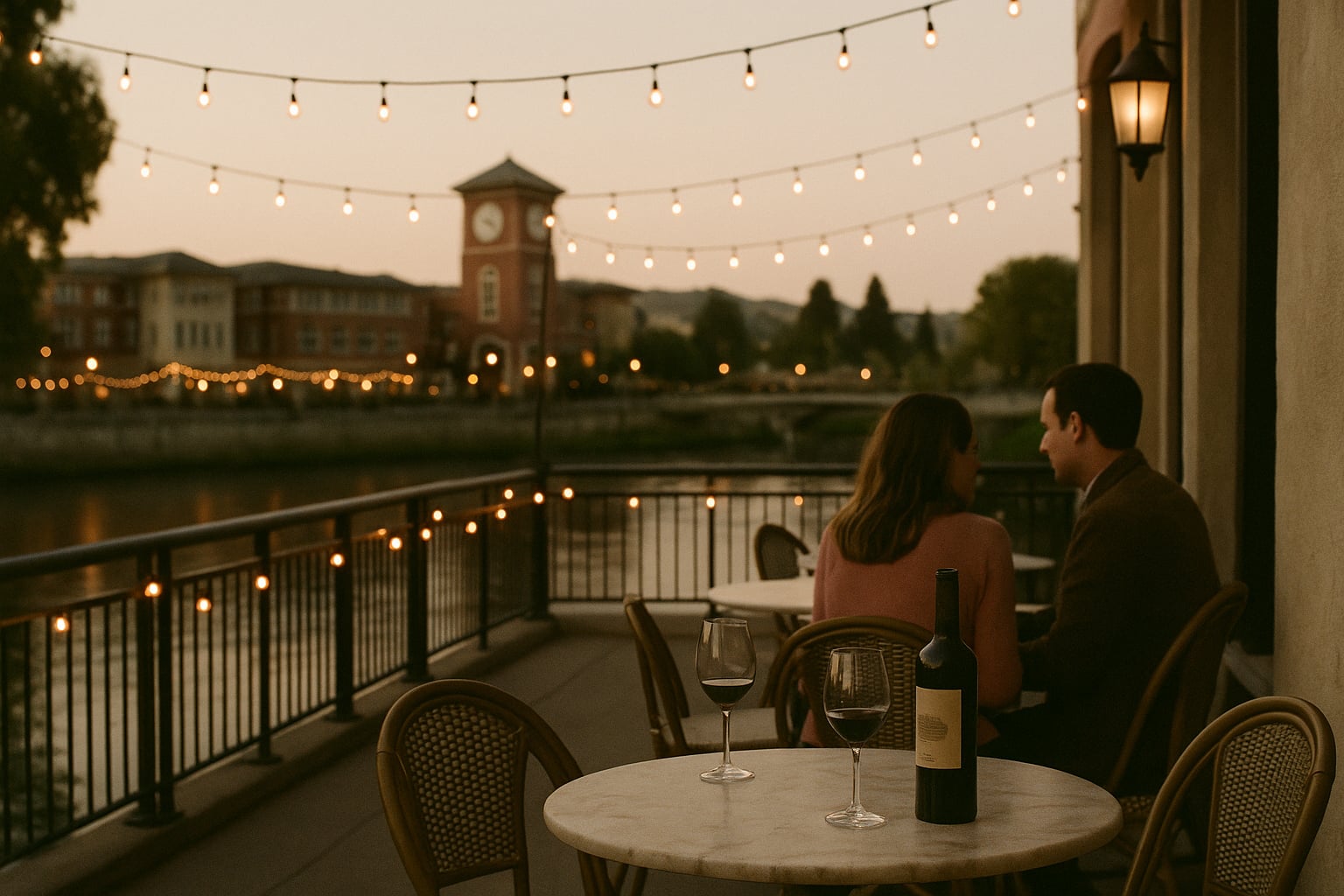
Pick a low-pressure setting. Side by side works better than face to face when the thing is heavy. A walk. The car. The kitchen while one of you is cooking and the other is leaning on the counter with a glass of wine. Some of the most real things get said in motion or in parallel, not across a table arranged for seriousness.
Don't wait until you're calm enough. If you're waiting until you feel no emotion about it, you'll wait forever. Say it with the feeling in it. That's not a flaw. That's the thing itself.
What Happens After
Sometimes it goes well and you feel the specific relief of something physical leaving your chest. You didn't know how much you'd been carrying it until it's out.
Sometimes it goes awkward. The response is defensive or confused, and you have to do the harder work of staying in it instead of retreating into never mind, forget it. That retreat is the real danger. The saying-of-the-thing matters less than what you do in the first three minutes after.
And sometimes it turns out the thing you rehearsed wasn't quite the real thing. Saying it pulls something truer up behind it. That's not a failure. That's what conversation is actually for.
The silence you've been keeping has a shape. You know it. It sits between you at dinner and at the edge of the bed and in the car and at two in the morning when you're both awake but neither of you says so.
It will not wait forever. Nothing does.
Say the crooked version. Tonight, or tomorrow, or the next time the car is quiet and you're moving through the world side by side. Say it before the right moment becomes a reason not to.