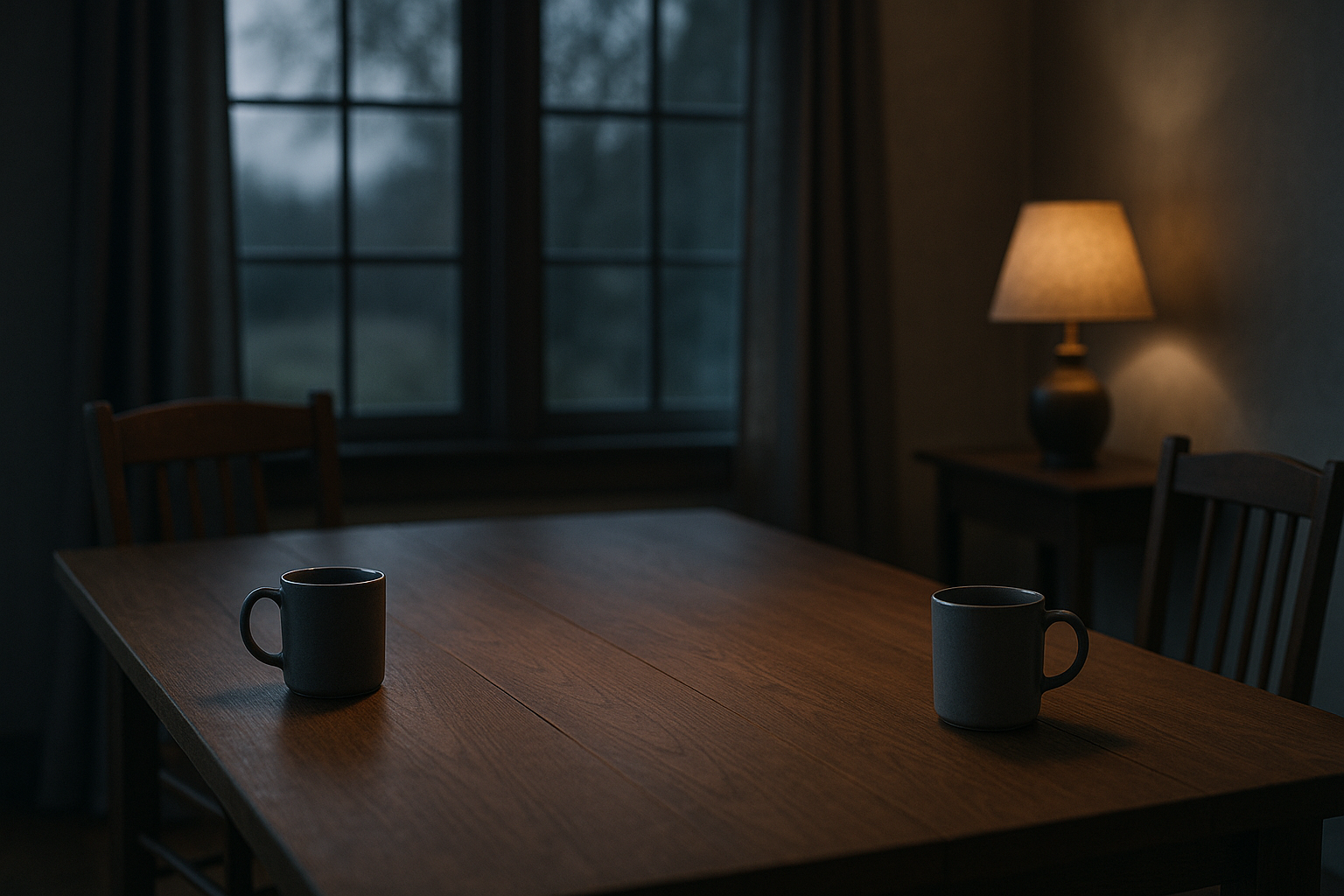
You said sorry. They said it's fine. You made dinner, or you had sex, or you watched something on TV together and fell asleep touching. By every visible measure, it was over.
Except it wasn't. Not really. And you both know it, in that way where neither of you will say it out loud because saying it out loud means doing the whole thing again.
This is the most common unfinished thing in long-term relationships. Not the fights you never resolved. The ones you thought you did.
What a Closed Conversation Actually Looks Like
A closed conversation has a shape you recognize. Tension, then a breaking point, then an apology from one or both of you, then relief so immediate it almost feels chemical. The body wants the fight to be over. So it decides it is.
The apology in these moments is usually genuine. Nobody's faking. But it's aimed at the discomfort, not the wound. You're apologizing for the volume, not the thing you said at that volume. For the door you slammed, not the week of withdrawal that made someone feel invisible enough to finally say something.
The apology addressed the argument. The argument was never really the problem.
The relief is real. The resolution isn't.
The Thing That Stays in the Room
There's a specific quality to unfinished repair. It doesn't announce itself. It shows up sideways: a slightly too-careful tone the next day, a joke that lands a few degrees flat, one of you going to bed five minutes before the other when you usually go together.
Micro-withdrawals. The body keeping score while the brain insists it's moved on.
After a while these accumulate into what couples call a drift. A distance that feels ambient, sourceless. Hard to point at. They'll say things like I don't know, we've just been off lately and trace it to stress, to the kids, to work, to anything. Rarely to the Tuesday three months ago when someone said sorry and meant it but didn't say the right thing.
Why We Stop Short
Part of it is that going deeper is expensive. You've both already spent something on the fight itself. The apology feels like the finish line, and crossing it offers actual relief. Staying in the room longer, to talk about what was under the thing you fought about, requires a kind of courage that most people honestly don't have when they're already depleted.
Part of it is that the real thing is scarier. The fight was about the dishes, or who forgot the reservation, or a comment at dinner that landed wrong. The thing under it is usually something like: I've been feeling irrelevant to you. Or: I'm afraid we're becoming roommates. Or just: I miss you and I don't know how to say that without sounding pathetic.
Those sentences are hard to say. So instead you close the loop on the surface fight and agree, wordlessly, to leave the rest alone.
What Actual Repair Requires
It doesn't require a long conversation. That's the first thing to let go of. The idea that real repair means two hours at the kitchen table re-litigating everything is what stops people from starting.
What it actually requires is one more sentence after the apology. Not a thesis. A sentence.
Something like: And I've been thinking about why that happened. Or: I think what I was actually upset about was something older than tonight. Or even just: I don't think I got at the real thing yet. Can I try again?
That sentence reopens the door without making the other person feel like the fight is restarting. It signals that you're not retreating, you're going deeper. There's a difference, and people feel it.
The Scenario That Makes This Concrete
They planned something you didn't show up for fully. Physically present, somewhere else entirely. They noticed. Didn't say anything then, but it came out later, attached to something unrelated, the way these things always do.
You apologized for snapping. Meant it. They said it was fine. And technically, that fight was over.
But the original thing: the feeling of planning something and watching you be somewhere else in your head, the quiet disappointment of it, the small wondering about whether this is just how it is now. That part didn't get touched.
You could go back. Not to the argument. To that. A week later, over coffee, or in bed before sleep when the lights are off and it's easier to say true things: I've been thinking about that night. I think you felt like I wasn't really there. And you weren't wrong.
That's the repair. Not the sorry. That.
How to Know If You're Actually Done
A clean repair has a specific feeling: the weight of the thing actually lifts. Not the relief of the fight ending, which is more like pressure releasing. A lift. Where you can reference what happened without either of you tensing.
If you can't mention it lightly a week later, it's probably not done. If the other person still goes slightly careful when it comes up, it's probably not done. If you feel a small internal flinch when you remember it, something's still sitting there.
None of this means you need to excavate every old fight. Some things fade on their own with enough time and enough good between you. But the ones that left a residue: those are worth a second look. Not because the relationship requires it. Because you deserve to not be carrying it.
The Longer You Wait, the More Normal It Feels
This is the part nobody warns you about. Unresolved things don't stay sharp. They soften into texture. Into how we are. You stop noticing the specific wound and start just feeling the shape it left.
Couples who've been together long enough accumulate years of these. Small closures that weren't quite closures. They mistake the weight of it for something inevitable, something that just happens after a decade. It's not. It's just a lot of almost-repairs stacked on top of each other.
The good news is you can still go back. Not all the way. Not to every one. But to the ones that still have a little warmth when you press on them. That's where the actual work is. And it's less work than you think, once you stop confusing resolution with relief.