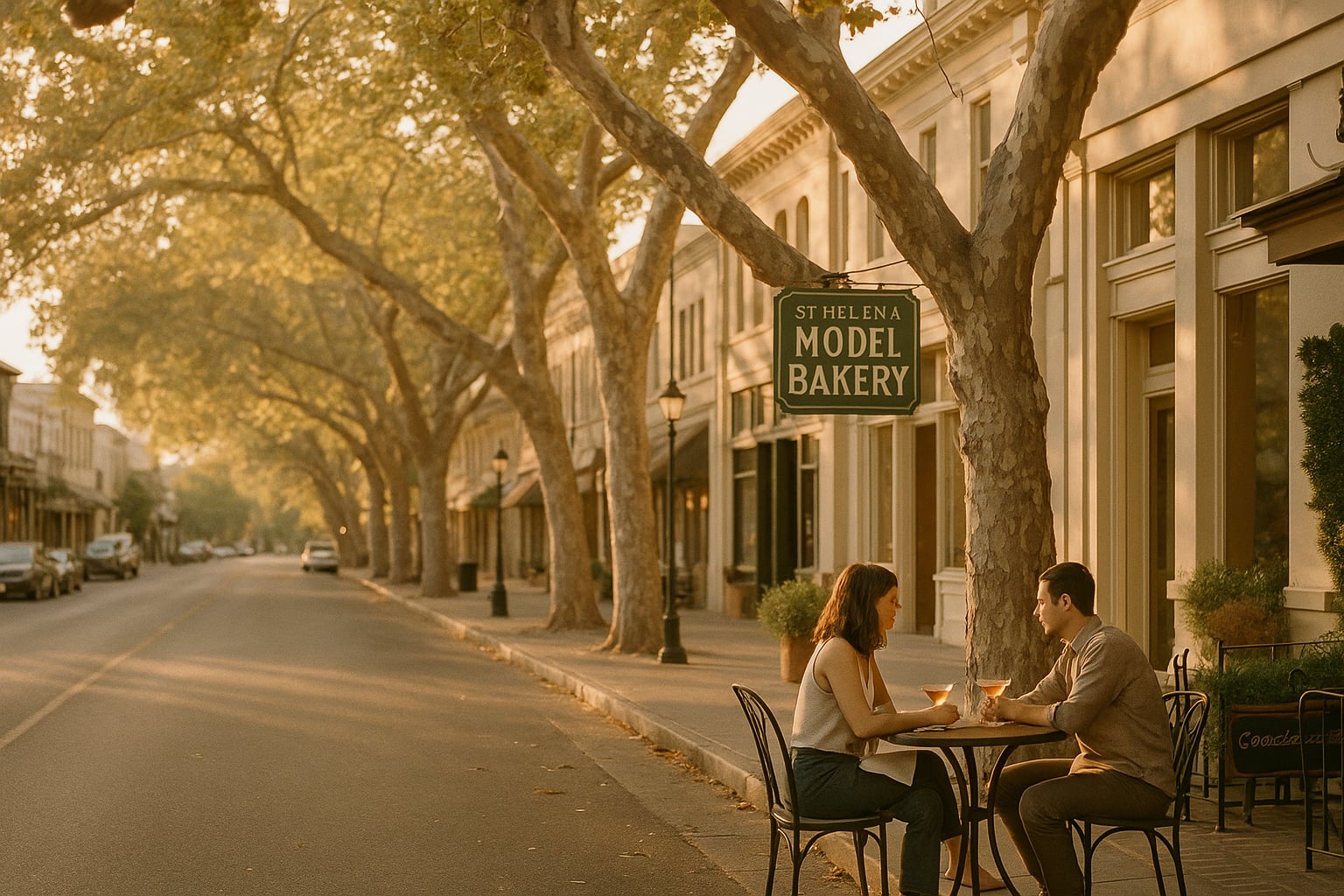
You're mid-sentence and you already know you're going to edit the ending. Maybe you soften the thing that actually bothered you. Maybe you swap the real feeling for a version that's easier to explain. Maybe you just say "I'm fine" and mean something far more complicated, and let it go, again, because the moment isn't right, again.
That's not communication. That's a performance. And the longer you're with someone, the more rehearsed it gets.
The Gap Nobody Names
Every couple has it. The gap between who you actually are in a given moment and who you present to your partner. In early dating, the gap is wide and obvious — you're literally auditioning. That's fine. That's dating.
What's less obvious is when the auditioning never stops. When you're three years in, or eight, or fourteen, and you're still editing yourself — not out of politeness, but out of habit. Out of not knowing what would happen if you didn't.
The performed version isn't fake, exactly. It's just partial. Optimized. You've learned what lands, what worries them, what causes the look. So you route around those things. Every time.
What It Actually Looks Like
You don't mention that the job thing is stressing you out more than you've let on, because the last time you brought it up they got anxious and then you spent the rest of the night managing their anxiety instead of your own. So you don't bring it up.
You're annoyed — genuinely annoyed — but you've learned that expressing it directly causes a thing to happen that costs more energy than the annoyance is worth. So you perform fine. You perform easy. You perform handled.
You want something in bed you've never quite said plainly, so instead you hint at it sideways and hope they get there on their own. They don't. The hint disappears. You file it away.
None of these are dramatic moments. That's the whole point. This is the ordinary erosion. The thousand small decisions not to say the actual thing.
Why You Do It
Partly protection. You've learned the terrain of this relationship — what cracks appear where — and you navigate around them like someone who knows every loose board in an old house.
Partly efficiency. Real conversation is slow. It risks something. The curated version moves faster and keeps everything functional.
And partly — this is the uncomfortable one — because somewhere along the way, you decided their version of you was more important to maintain than your actual experience of being you.
The person your partner is in love with might be slightly fictional. Not because you lied. Because you optimized.
— MLL
When Performance Becomes the Whole Act
The danger isn't a single edited moment. The danger is when the edited moments stack up until there's no un-edited version left in the room.
You start to feel unknown in your own relationship. Or worse: you feel known, but for a person you're not entirely sure is you. The loneliness that comes from that is specific and hard to explain, because it looks from the outside like a perfectly functional partnership.
Sometimes you feel it on a Saturday morning after eleven years together — the sense that you've been sharing space, sharing a bed, sharing a life, and somehow still managed to become strangers to your own interiority.
And then you pick up your phone, check the weather, and let it pass.
The Micro-Behaviors Worth Watching
You rehearse what you're going to say before you say it — and the rehearsed version is noticeably different from your first draft.
You notice you're more honest in text than in person. Or more honest with a friend, a therapist, a stranger on a long flight. Anyone but them.
You feel a small relief when they leave the room, not because you don't love them, but because you can stop performing for sixty seconds.
You laugh at a joke you didn't find funny. Not to be kind: because you've forgotten how to respond otherwise.
The Reframe
Here's what this isn't: proof that your relationship is broken, or that you married the wrong person, or that you need to blow anything up.
What it is: a signal that the relationship has been living slightly below its actual capacity. That there's a version of this partnership that has more room in it than the one you've been operating in.
The performance isn't a character flaw. It's almost always a rational adaptation to a dynamic you both created together, usually without noticing.
Which means you both have access to changing it. Not with a conversation about communication — god, not that — but with one unedited sentence at an actual moment. With saying the less-safe version of the thing and seeing what happens.
A Practical Scenario
You're driving back from Healdsburg on a Sunday, full from a long lunch, the kind where the afternoon got loose and the second bottle was a good idea. It's quiet in the car. The light's that particular gold it gets on the 101 in October.
And you have a thought. A real one. About the relationship, or yourself, or something you want that you've never quite said plainly.
You could edit it. You've done it a hundred times. Or you could just say it, to the windshield, to the light, to them — in the plain first-draft version before your brain cleans it up.
That moment is always available. You just keep postponing it until the conditions are perfect.
The conditions are never perfect. The right move is to say it anyway.
The partner you've been performing for is also performing for you. That's probably worth knowing. It means neither of you has met the actual other person in a while. And it means the discovery, when it happens, tends to feel less like a crisis and more like: oh, there you are.