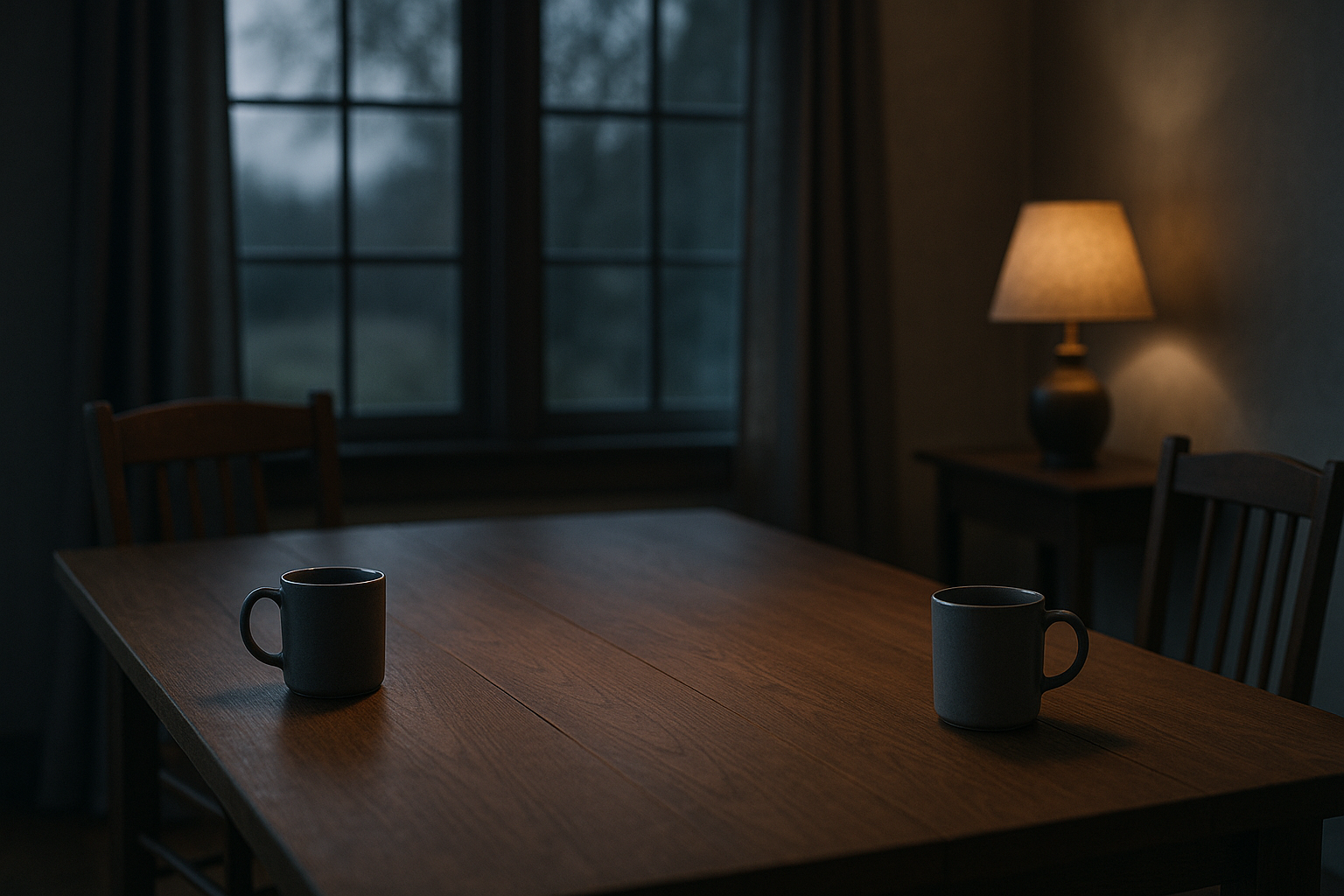
You were trying to be funny. Maybe you were deflecting, maybe you were flirting, maybe you'd made the same joke a hundred times and it always worked. This time it didn't. They went quiet. You felt it — that particular quality of stillness that isn't neutral. And then you both moved on, because what else do you do.
Except you didn't fully move on. And neither did they.
What Actually Happened in That Silence
The joke itself almost doesn't matter. What matters is the split second after it lands wrong: one person realizes they've just exposed something — a careless assumption, a soft target, a blind spot they didn't know they had — and the other person absorbs it. Quietly. Without saying anything.
That absorption is the rupture. Not the joke. The swallowing of it.
Fights at least have the decency to be legible. Both people know something happened. A misread joke? One person often doesn't even register it went wrong. They move on to dinner, or the drive, or checking their phone. The other person files it somewhere interior and goes quiet in a way that looks fine.
Trust doesn't erode in dramatic moments. It erodes in the small ones nobody names.
— Modern Love Living
The Anatomy of a Misread Moment
Say it's a Saturday morning. One of those soft, half-awake hours before anything is required of either of you. Your partner says something self-deprecating about their body. You make a joke: light, affectionate, the kind you've made before. This time they don't laugh. They say yeah and look back at their phone.
You think: okay, weird. And you get up to make coffee.
What you don't see: they lay there for another few minutes holding the weight of it. Not devastated. Just slightly smaller than they were thirty seconds ago. The joke landed on the exact nerve they'd been protecting. And you didn't notice. And they didn't say.
That's the pattern. Not cruelty. Not intention. Just a small precision miss — and the silence that follows it.
Why Humor Is the Most Exposed Wire in a Relationship
Humor is how most people test whether they're truly safe with someone. Early on, a shared laugh is proof of concept: you get me, I get you, we're in this together. When it stops working, something more fundamental is being communicated.
A joke that lands wrong in a long relationship isn't just a failed punchline. It's a signal that someone's internal landscape has shifted — their soft spots have moved — and you haven't updated your map.
This is especially true with physical self-image, career anxiety, family stuff, anything they've mentioned once and never brought up again. Those are landmines they didn't mark on your copy of the map. They assumed you'd feel them.
The Version That Happens in Bed
It happens in intimate moments too, maybe most often there. A quip during sex that kills the mood. A throwaway comment about the way they look or sound or react. You meant it warmly. They heard the edge they'd been afraid was there all along.
They'll finish. They'll fall asleep or get up for water or scroll their phone. But some small door just closed. Not locked. Just not as open as it was an hour ago.
And because it happened in a context where neither of you wants to do the work of dissecting it, it stays unaddressed. Those are the moments that accumulate.
What the Person Who Made the Joke Is Actually Doing
Often: deflecting. Humor is a beautiful, socially rewarded way to avoid sitting in discomfort. Your partner said something that made you feel tender or helpless or implicated. You made it funny. The joke protected you from having to feel the weight of what they just shared.
They registered the deflection. They always do, even when they can't name it.
The other version: you genuinely didn't know it would land that way. You've made that joke, or a version of it, before. It worked. Their landscape shifted and nobody told you. This is less about carelessness and more about the slow drift that happens in long relationships when both people forget to report from inside.
The Reframe: It's Not the Joke. It's the Update You Skipped.
Every relationship requires a running update. Not scheduled, not formal. Just: noticing when someone's sensitivities have shifted. Noticing what's quietly gotten heavier for them. Staying curious about the person who is sleeping next to you, who has changed in ways that aren't legible unless you're paying close attention.
The misread joke is just the symptom. The underlying thing is: did you notice they'd changed? Did you know which nerve you were near? And if they flinched, did you catch it?
Most people don't catch it. Not because they don't care. Because the flinch is barely visible and the moment is moving fast.
What You Can Do With That Moment — Even Days Later
You don't need a repair conversation with an agenda and talking points. You need about forty-five seconds of honesty.
Something like: I've been thinking about that joke I made the other morning. I think it landed badly and I didn't catch it in the moment. I'm sorry. That's it. No over-explanation. No therapy language. Just: I noticed, I care, I'm saying it out loud.
The other person doesn't need you to perform remorse. They need to know you saw them. That their reaction registered somewhere.
The Bigger Pattern This Points To
Relationships accumulate these moments. Most couples have a drawer full of them. Small deflations, quiet flinches, jokes that went sideways and got buried under the rest of the day. Individually, none of them are the thing that ends you. Together, they form a kind of sediment.
The sediment is what people are usually actually talking about when they say they've grown apart. It's rarely one thing. It's a hundred tiny unwitnessed moments where one person shrank a little and neither of them named it.
The fix isn't never making a bad joke. It's staying close enough to someone that you feel when you've touched something real. And when you do, not moving on quite so fast.
You don't need a big conversation. You need to say the small thing you skipped. That's usually what the relationship is waiting for.