Most couples are rebelling against something. Against the way their parents fought. Against the marriage that looked perfect from the outside and wasn't. Against the script that says who proposes, who earns more, who follows whom across the country for a job. There's a template, even when you're rejecting it. The template is the thing you push off from.
Queer couples, a lot of the time, don't have that. Not in the same way. There's no grandparents' anniversary photo to replicate or subvert. No built-in cultural story that says: this is what two women building a life looks like, this is what two men do on a Sunday morning after eleven years, this is how two nonbinary people handle the question of kids. The archive is thin. The archive is almost nothing.
Which means you're not renovating. You're building on an empty lot. And that is both a gift and a specific kind of weight that's hard to explain to people who've never felt it.
The Freedom Is Real. So Is the Vertigo.
Nobody tells you that freedom without a floor feels like falling. You get to decide everything: the shape of commitment, whether marriage means anything to you, who handles what, whether roles even apply. No one is handing you a checklist. That sounds liberating, and it is. It's also disorienting in a way that sneaks up on you.
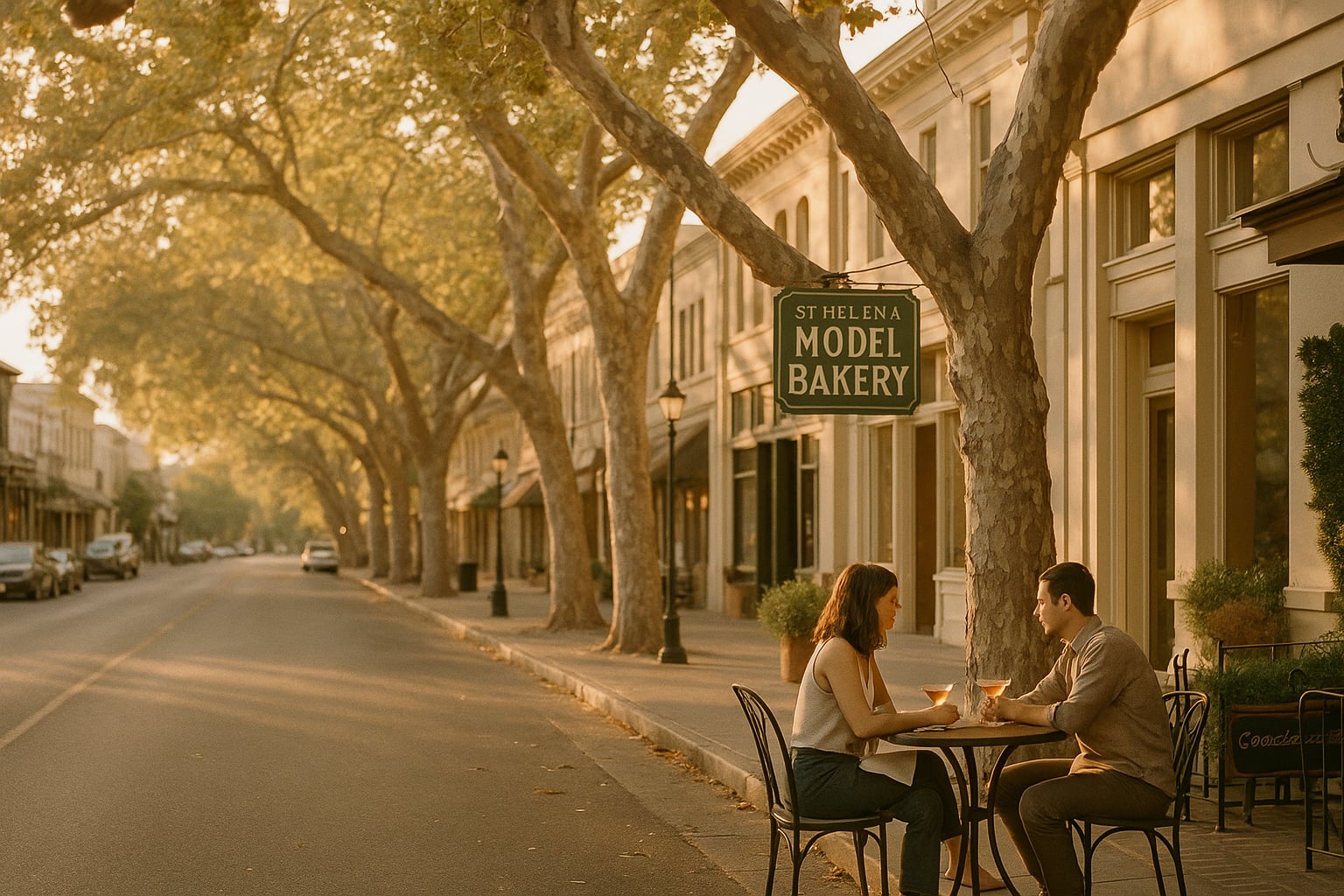
You're sitting across from someone you love in a tasting room in Healdsburg, third glass in, and someone at the next table mentions they just got engaged. The whole table reacts with a kind of reflexive certainty: next comes the venue, next comes the date, next comes the rest of it. And you look at your partner and realize you've never once assumed a next. You've only ever decided a next. On purpose. From scratch. Every time.
That's not a complaint. It's just true. Deciding on purpose is harder than inheriting a path, even when the inherited path was never quite right for you.
What 'No Template' Actually Looks Like Day to Day
It's not dramatic. It's the small stuff, the daily stuff, the stuff that in a straight relationship often gets resolved by cultural default before anyone has to think about it.
Who introduces themselves how at a work event. Whether you call each other partners or something else. Whether one of you is expected to soften in conflict because someone has to, and if so, who decided that. Whether monogamy is the default assumption or something you actually talked about at the beginning, eyes open.
These are not abstract questions. They show up at dinner parties, at the doctor's office, in the text thread with your families. They show up at 1 AM when something feels off and you can't quite name it because you don't even have a shared language for what the thing is supposed to look like when it's working.
The Invisible Labor of Inventing It
Here's the part that doesn't make it into Pride month content: building a relationship structure from nothing takes actual energy. Cognitive energy. Emotional energy. It's work that straight couples often don't have to do, not because they're lazy, but because the template does some of the load-bearing for them.
When you have no template, every structural decision is a negotiation. And not just once. You revisit it when life changes. When someone comes out again, quietly, in the middle of a long relationship. When the definition of commitment shifts. When you want something your partner didn't know to expect because the culture never surfaced it as a thing to expect.
It can make the relationship feel like it needs more maintenance than it should. Or it can make you realize the maintenance was always necessary — you're just doing it consciously.
We never assumed anything. We decided everything. That sounds exhausting and it sometimes was, but we also never ended up somewhere we didn't choose.
— MLL reader, she/her, five-year partnership
The Specific Relief of Not Having a Script Either
And here's the other side of it, the part worth sitting with: when there's no template, there's also no wrong way to do it. Not by default. Not structurally.
No one can tell you that your relationship is failing the template because there is no template. No mother-in-law with a quiet sense that things aren't going how they should. No cultural moment where you're supposed to have reached a certain milestone and haven't. You are, genuinely, free of that particular pressure. That's not nothing.
The couple who spends Saturday mornings in complete silence with coffee and separate books. The two people who've been together for a decade and are still not legally married and don't feel any urgency about it. The partners who move through roles fluidly, who don't perform a version of partnership for anyone. These are not failures of commitment. They're just different architectures.
Chosen family is part of this too. Your queer friend group is not background noise to the relationship; it's often the infrastructure that makes the relationship possible. The people who knew you before you knew yourself, who form a kind of chorus around the partnership that straight couples often get from extended family by default. It functions differently. It's built deliberately. Like everything else.
When the Vertigo Becomes a Fight
What happens sometimes: the freedom turns into a fight about something that sounds completely mundane. Who's handling the lease renewal. Whether you're going to your partner's work event. Who texted the other person's family about the holidays.
What the fight is actually about: nobody knows whose job that was. Not because you're irresponsible, but because there was no inherited script that assigned it. The resentment that shows up isn't always about the specific thing. It's about the fatigue of deciding everything, always, on purpose.
Naming that out loud helps more than it should. Not as an excuse. As a location. This isn't about the lease. We're tired of not having defaults we can trust. That's the actual sentence. And once you say it, you can do something with it.
How to Actually Live Inside the Blank Page
You don't solve this. You settle into it. There are a few things that seem to help.
Make some decisions explicit that other couples leave implicit. Not as a formal exercise. Just say the thing. I want us to be the kind of couple who takes a real trip once a year, even when money is tight. Do you? It sounds obvious. Most people never say it.
Let the template you're building be enough. Resist the pull to validate it by how it compares to something else. Your relationship doesn't need external coherence. It needs internal coherence. The people inside it are the only ones who have to understand it.
Find the moments of existing precedent that are yours. Not the cultural ones. The personal ones. The things you've already done together that felt right. Those are your template now. The drive with no destination that became a ritual. The Sunday morning shape that settled itself after a year. The way you fight and come back. That's the archive you're building.
There's a particular kind of intimacy in a relationship that has no blueprint. You can't coast on precedent. You can't assume anything has been pre-approved. You have to keep looking at each other and asking: is this what we actually want, or is this just what we landed on?
That question is a burden. It's also, if you let it be, a form of attention. A way of staying present to something instead of just maintaining it. Not everyone gets to build from the ground up. The blank page is terrifying and it is yours.