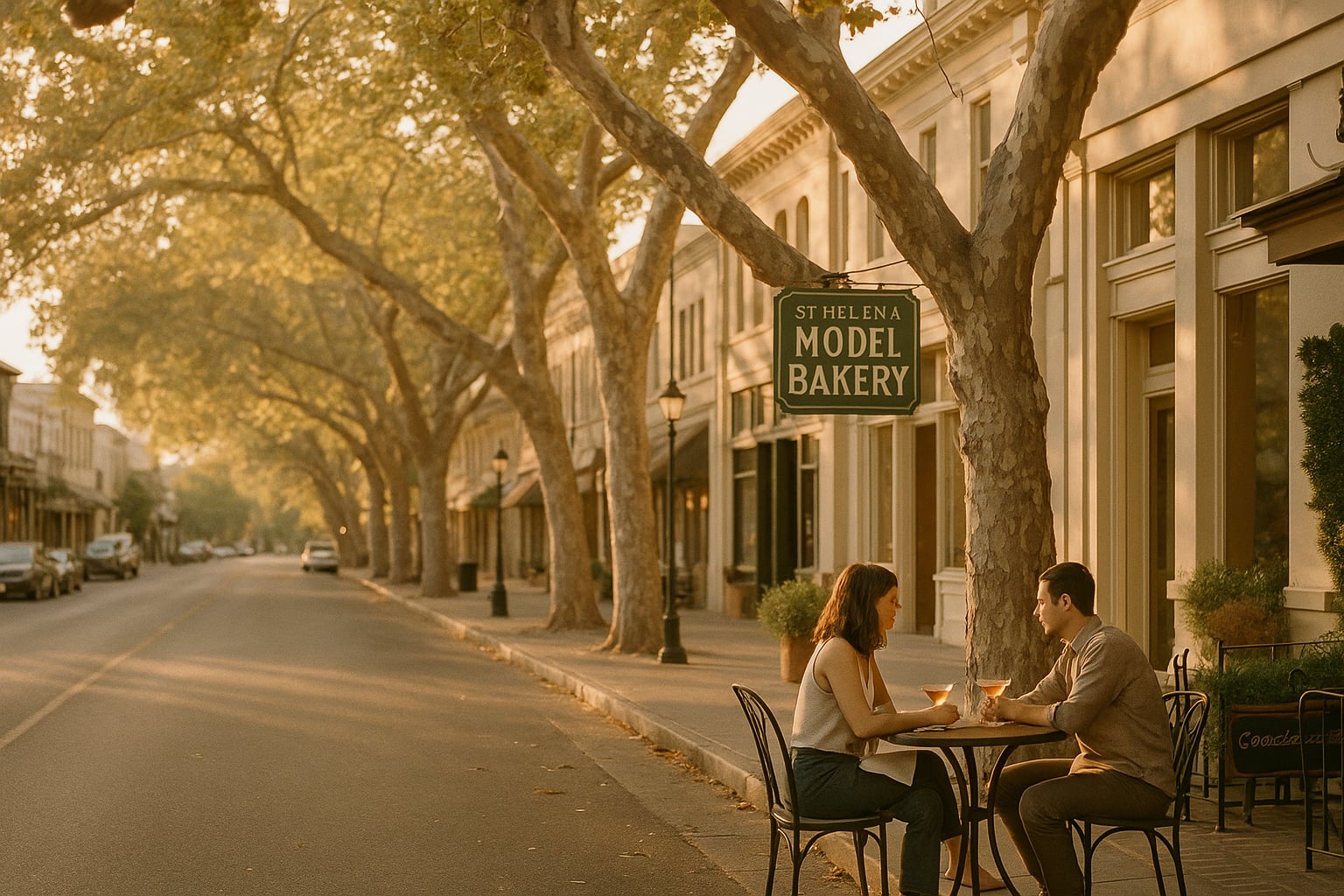
You open the app because you're bored — or maybe because your partner fell asleep mid-sentence and you're lying there in the dark, not quite ready for that to be the end of the night. You watch a couple slow-dance in a Healdsburg courtyard. Then a surprise anniversary in Yountville. Then a proposal at Solage, golden hour, the hot springs catching the light behind them. Forty minutes later you haven't moved. You are, technically, consuming romance. But you have not felt a single thing about your own.
The Substitute Nobody Named
There's a specific kind of passive consumption that gets mistaken for inspiration. You tell yourself you're gathering ideas. Getting in the mood. Learning what's possible. But what's actually happening is quieter and a little more uncomfortable: you are letting someone else's romantic imagination stand in for yours.
Imagining your own love life is work. It requires wanting something specific, which means admitting what's missing. It requires picturing yourself — not a filtered, better-lit version — as the protagonist. The algorithm asks nothing of you. It just keeps going.
What "Couple Content" Actually Does to You
Couple content isn't neutral. Every video of someone receiving flowers in bed, every "day in our life" that's essentially a slow pan across linen and espresso and morning light, is quietly calibrating your sense of what a relationship should feel like from the outside.
Not from the inside. From the outside. That distinction is doing enormous damage.
Because relationships, real ones, are an inside experience. The feeling of someone's weight shifting toward you at 2 a.m. The specific temperature of a Saturday morning where nothing is scheduled. The silence that's comfortable versus the one that's a wall. None of that photographs.
We are being trained to evaluate our intimacy by metrics it was never designed to meet.
— MLL Editorial
And so we sit with a partner who is right there, physical and real and a little tired and not framed by golden hour, and we feel vaguely dissatisfied without knowing why.
The Micro-Behavior Worth Noticing
Here's the tell: you watch couple content most when your own relationship needs something from you.
Not when things are good. When you're bored. When desire has gone quiet and you don't want to face that directly. When you're annoyed about something small and don't want to have the conversation. The scroll becomes a very efficient way to feel like you're attending to your romantic life without actually touching it.
Notice the next time you reach for the phone in bed. What were you about to feel before you picked it up?
Imagination Is an Intimate Act
Here's what gets lost: the act of imagining something for your relationship — a weekend, a conversation, a specific thing you want to try — is itself an intimate act. It's you deciding your relationship is worth the effort of picturing a future with texture in it.
That's the thing the algorithm cannot do for you. It can show you a hundred wine country weekends. It cannot make you want to plan one with this specific person, for the specific reasons that are true about the two of you.
And that wanting — messy, specific, occasionally awkward to admit — is actually where desire lives. Not in the content. In the gap between what you see and what you go make real.
The Comparison Problem Is Worse Than You Think
We've talked about social comparison in the context of bodies, careers, apartments. We haven't talked enough about what it does to the felt sense of your own relationship.
When you watch someone else's partnership performed for an audience, you are watching a highlight reel that has been cast, lit, edited, and posted because it made the relationship look a particular way. You are comparing your interior life — the full version, the Tuesday night version, the version with the unresolved thing still sitting in the room — to someone else's exterior.
That comparison will never be fair. It will always make yours feel like it's missing something. And over time, that feeling compounds.
This Isn't About Deleting the App
That's not what this is. Couple content can be genuinely warm. It can surface an idea you wouldn't have had. A few summers ago, someone on the internet described a late-afternoon drive through Sonoma's backroads with no destination and no plan, windows down, stopping when something looked interesting. Completely ordinary. Completely good. That's real inspiration.
The question is what you do with it. Do you file it somewhere and eventually make it yours — give it the specific details that belong to your relationship, your partner, your actual Saturday? Or do you watch six more videos and feel the pleasant numbness of romantic proximity without the risk of romantic reality?
One of those is outsourcing. The other is just living.
How to Take Your Imagination Back
It doesn't require a grand gesture. It requires a smaller, more uncomfortable one: a moment of sitting with your own desire long enough to see what's actually there.
What do you actually want more of? Not what looks good. What would feel good, specifically, with this person, in the life you actually have?
Maybe it's a slow dinner with no phones and a second bottle of wine — not because you saw it somewhere, but because you've been running hard and your body is asking for stillness. Maybe it's saying something you've been sitting on for longer than you'd like to admit. Maybe it's something physical you've rehearsed in your head but never said out loud because it felt too specific, too revealing.
That specificity is the point. That's what the algorithm, by definition, cannot generate for you.
The Moment Worth Returning To
There's a version of a Saturday morning that belongs entirely to you: the particular light in your bedroom, the weight of a specific body beside you, the ambient sound of wherever you actually live. It is not curated. It does not have a filter. It might involve someone who still has a crease on their face from the pillow and is approximately thirty percent coherent.
And it is, if you put the phone down and stay inside it for a minute, the exact thing you were looking for in all that content.
The algorithm is good at a lot of things. It is genuinely terrible at helping you want what you already have. That part is still yours to do.